
WOVEN vs KNITTED Fabrics
One of the first things to understand in sewing is the difference between woven and knit fabrics. While they can sometimes look similar at first glance, they behave very differently once you start cutting and sewing them.
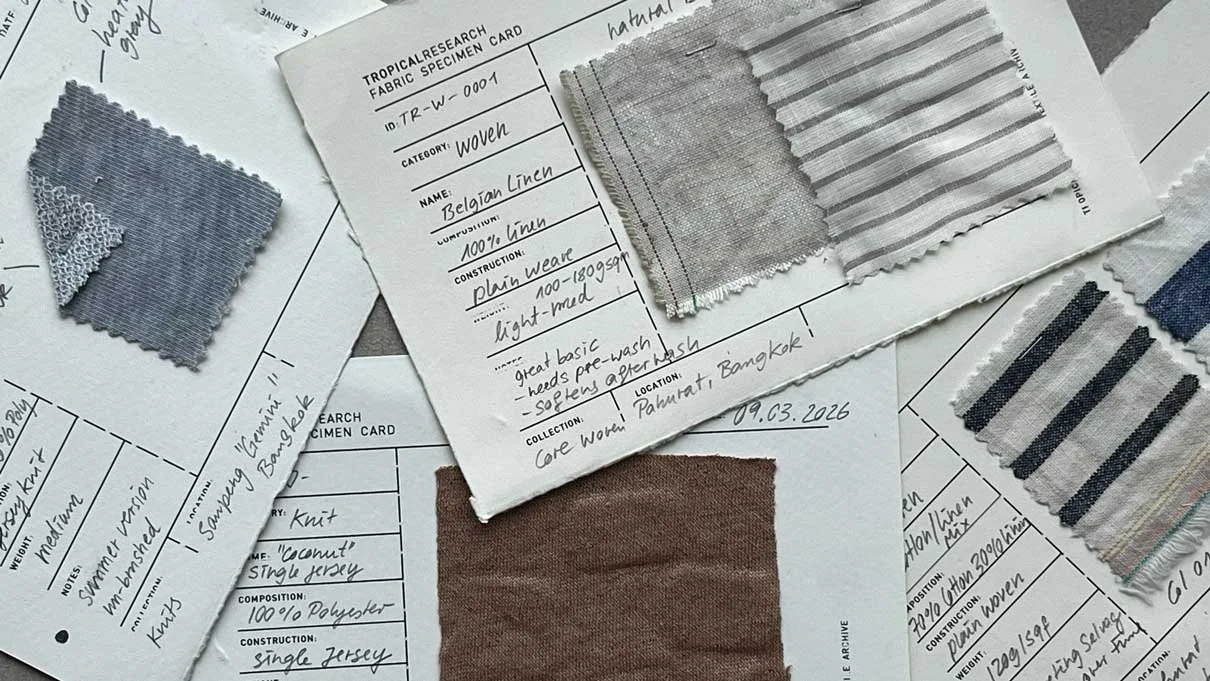
Understanding this difference will help you choose the right pattern, fabric and sewing techniques for your projects.
Woven Fabrics
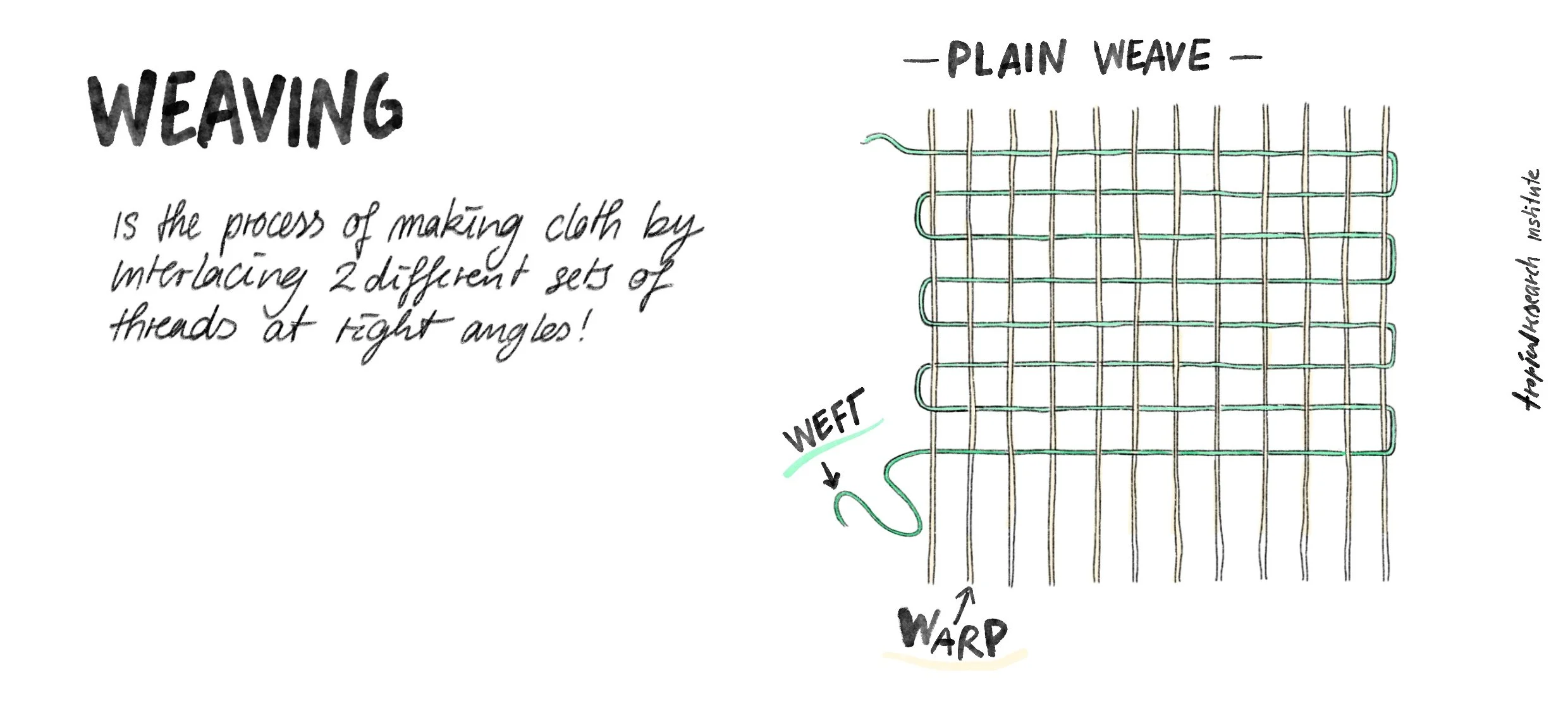
Woven fabrics are made by weaving horizontal (weft) and vertical (warp) threads together at a right angle. These threads create a stable fabric structure with very little stretch. The basic over/under weave is called a plain weave.
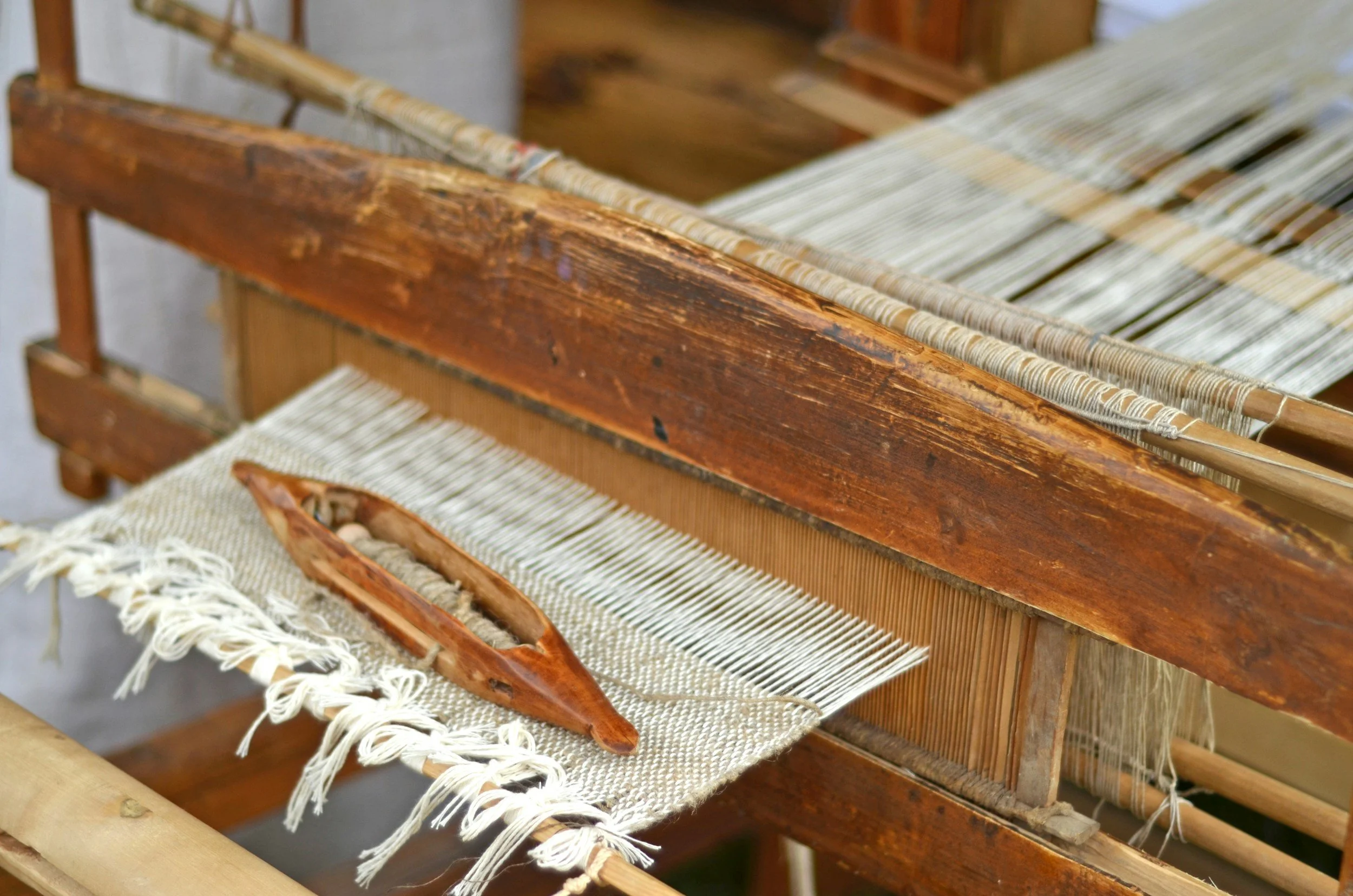
Cotton fabric being woven on a traditional loom - the white threads are the warp threads and the beige threads are the weft - they are the ones that get woven through the warp!
Most woven fabrics have a visible grain direction and tend to hold their shape well. Depending on the fibre and weave, woven fabrics can feel crisp and structured or soft and flowy.
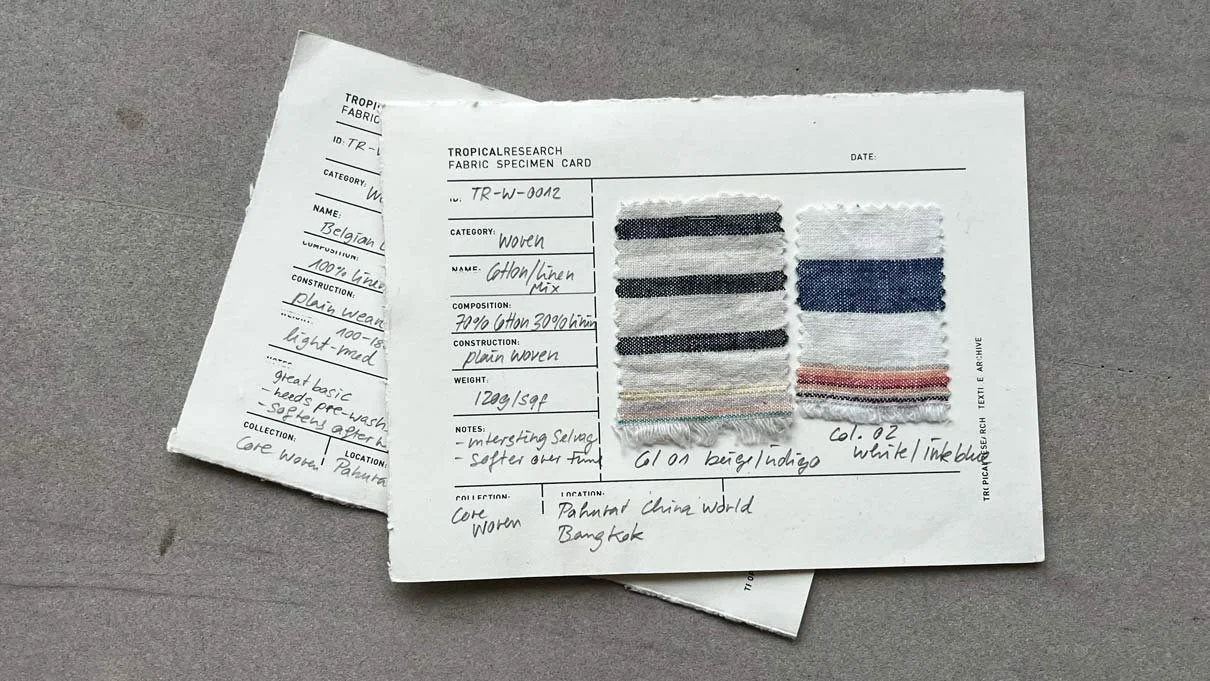
Common woven fabrics include:
Linen
Cotton poplin
Canvas
Denim
Rayon / viscose woven fabrics
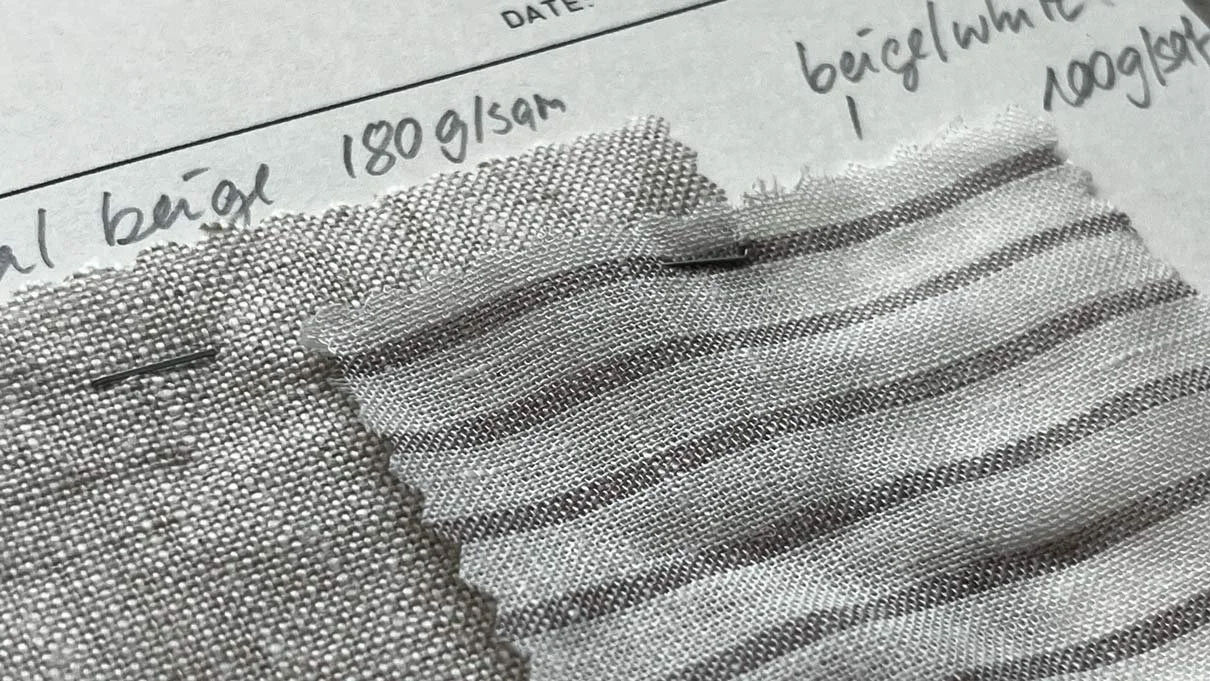
Woven fabrics usually fray at the raw edges and often require seam finishes such as overlocking, zig-zag stitching or French seams.
Knit Fabrics
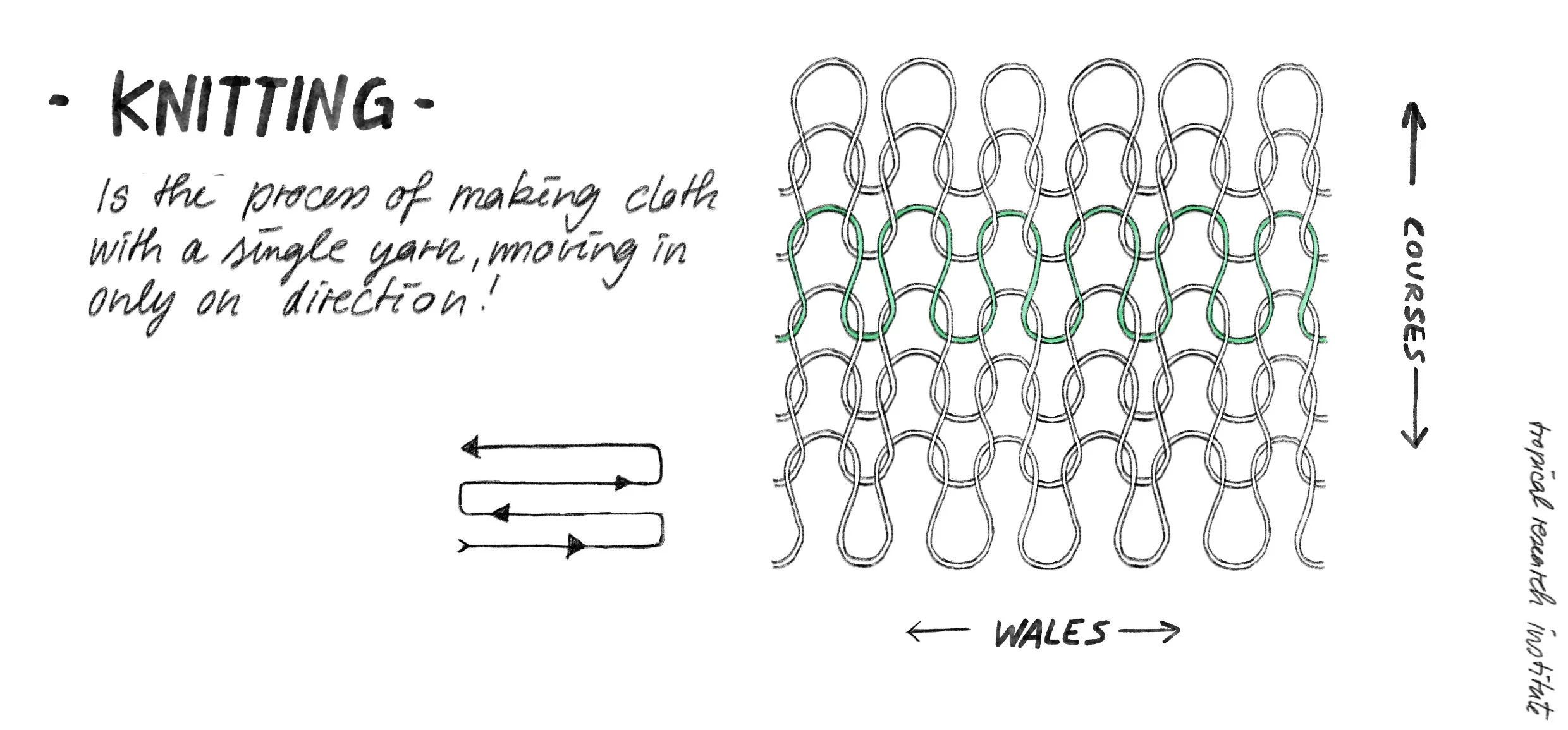
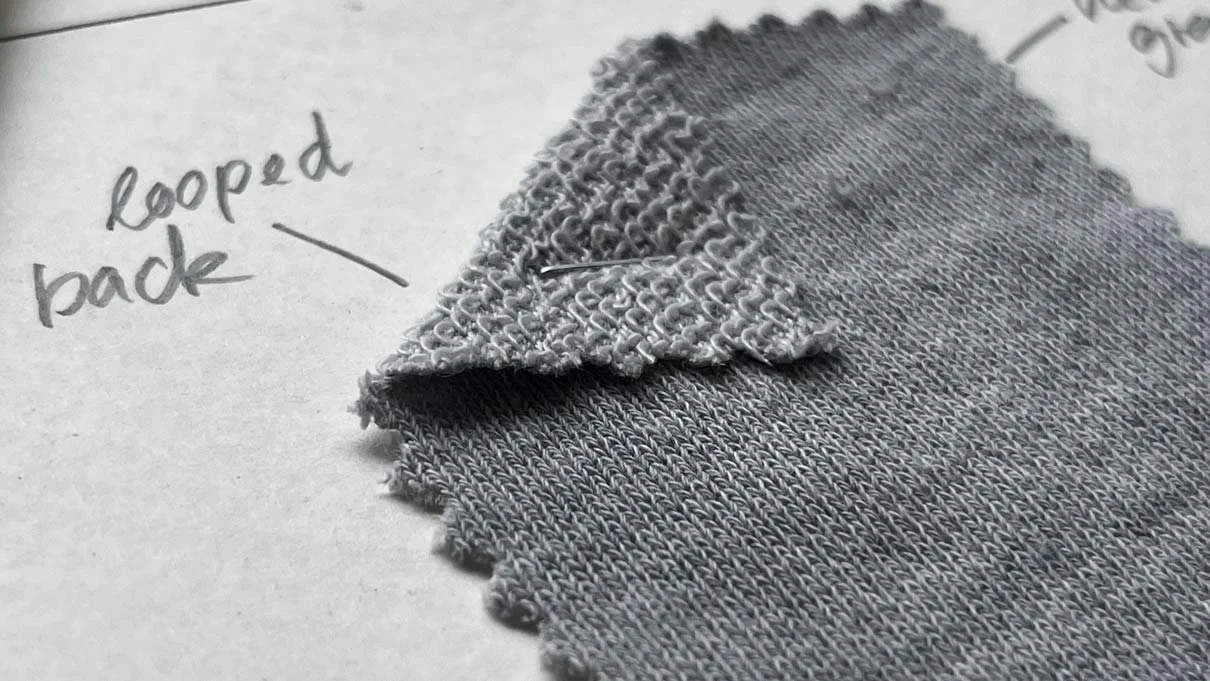
Knit fabrics are created from a series of interlocking loops from a single strand of yarn rather than woven threads. This looped structure gives knit fabrics their stretch and flexibility. Knits are often softer and more elastic than woven fabrics and are commonly used for comfortable everyday garments.
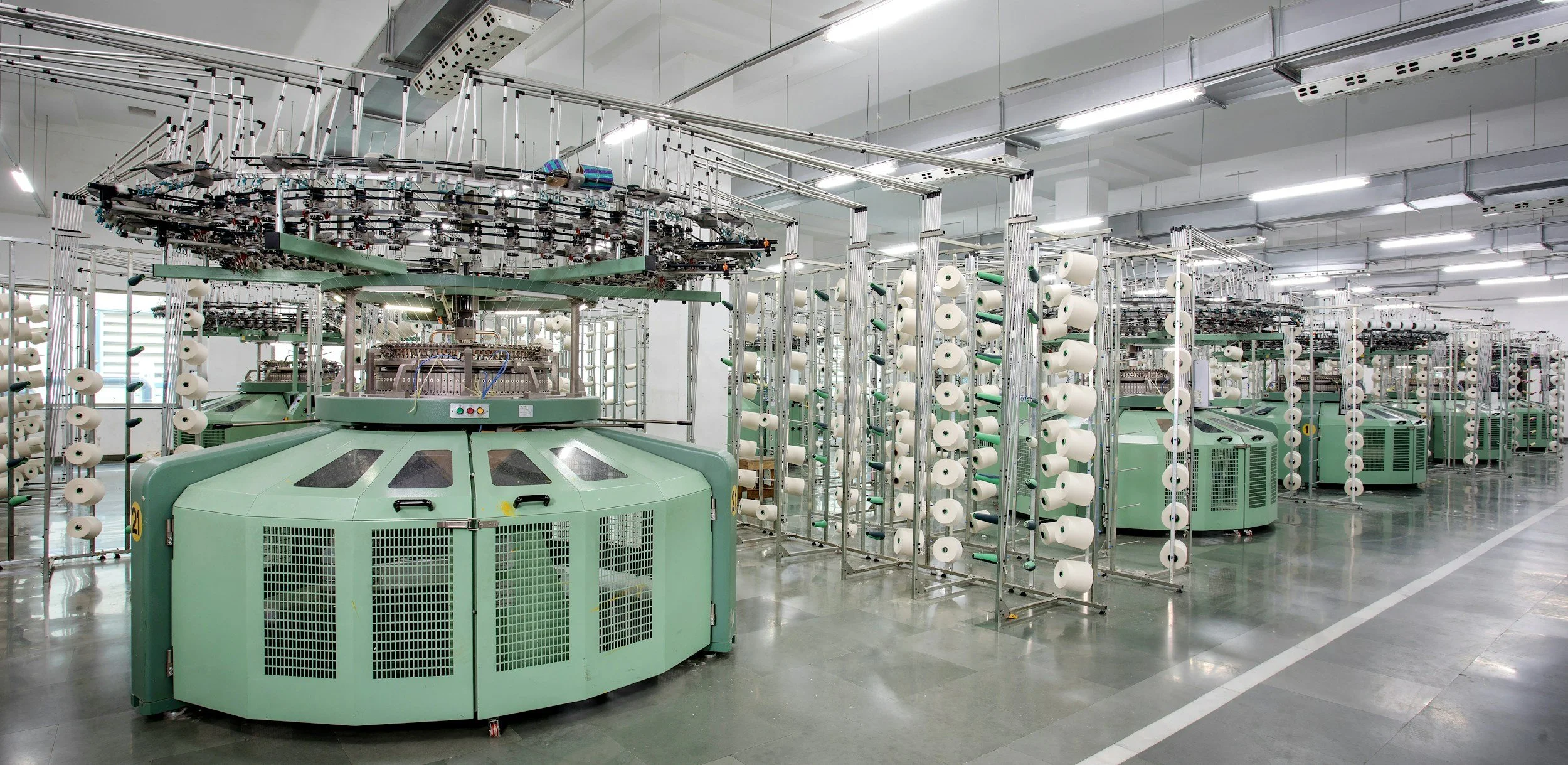
industrial scale circular knitting machines creating long tubes of fabric
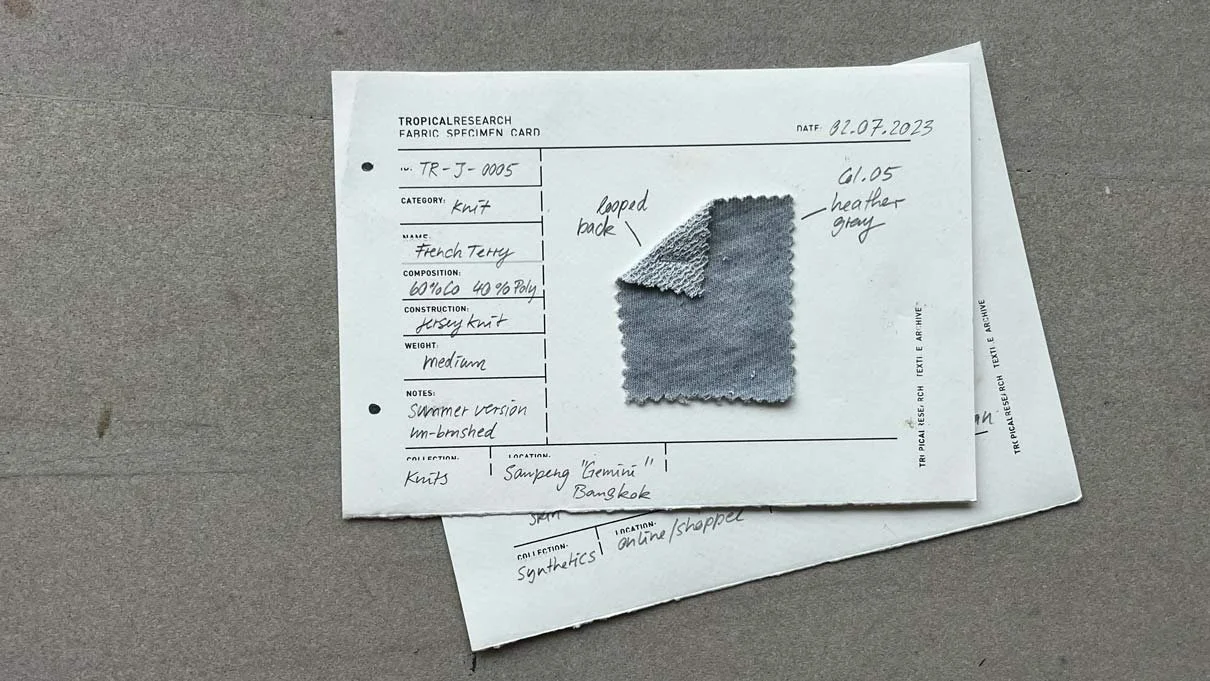
French Terry fabric sample card
Common knit fabrics include:
Jersey
Rib knit
French terry
fleece and fake fur
Interlock knit
Unlike woven fabrics, many knits do not fray heavily at the edges. However, they can curl, stretch out or shift while sewing.
How to Tell Them Apart
A simple way to identify a fabric is to gently stretch it in different directions. Woven fabrics usually have very little stretch, especially along the straight grain. Knit fabrics typically stretch more easily and recover their shape afterwards.
You can also look closely at the fabric structure:
Woven fabrics show a grid-like structure of crossing threads
Knit fabrics show tiny loops/Vs similar to knitting
Why This Matters in Sewing
Patterns are usually designed specifically for either woven or knit fabrics. Using the wrong fabric type can completely change the fit and behaviour of a garment.
For example:
A woven shirt pattern made in a stretchy knit may become oversized and unstable
A fitted knit T-shirt pattern made in woven linen may become too tight and probably unwearable!
Fabric choice is therefore an important part of both garment construction and fit.
Beginner Tip
If you are new to sewing, stable woven fabrics such as linen or cotton are often easier to control while cutting and sewing. Stretchy knit fabrics can require slightly different sewing techniques, needles and seam finishes.
If you want to learn more - check out this short clip!
