
FRENCH SEAM
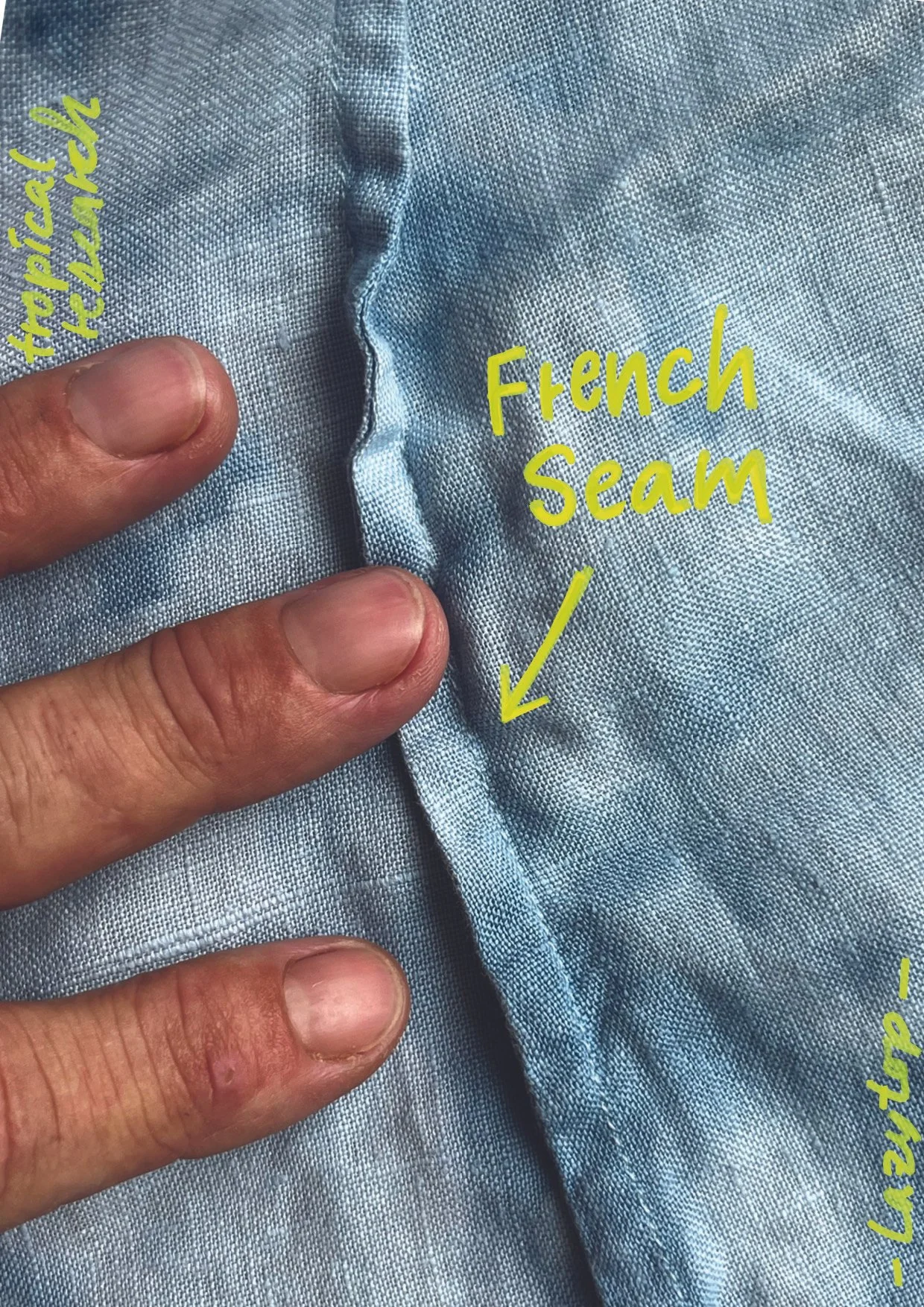
A French seam is a seam finish that completely encloses the raw fabric edges inside the seam itself. Unlike a basic seam, where the raw edges remain visible and usually require additional finishing, a French seam creates a clean and tidy finish on both the inside and outside of a garment.
French seams are often used for lightweight fabrics and garments where the inside finish is visible or expected to look particularly neat.
Why Use a French Seam?
French seams serve two purposes:
• Join fabric pieces together
• Enclose the raw edges to prevent fraying
Because the raw edges are hidden inside the seam, no additional seam finish is required.
French seams are often chosen for:
• Lightweight fabrics
• Linen and cotton garments
• Sheer fabrics
• Delicate garments
• Lingerie and sleepwear
• High-end garment construction
How to Sew a French Seam
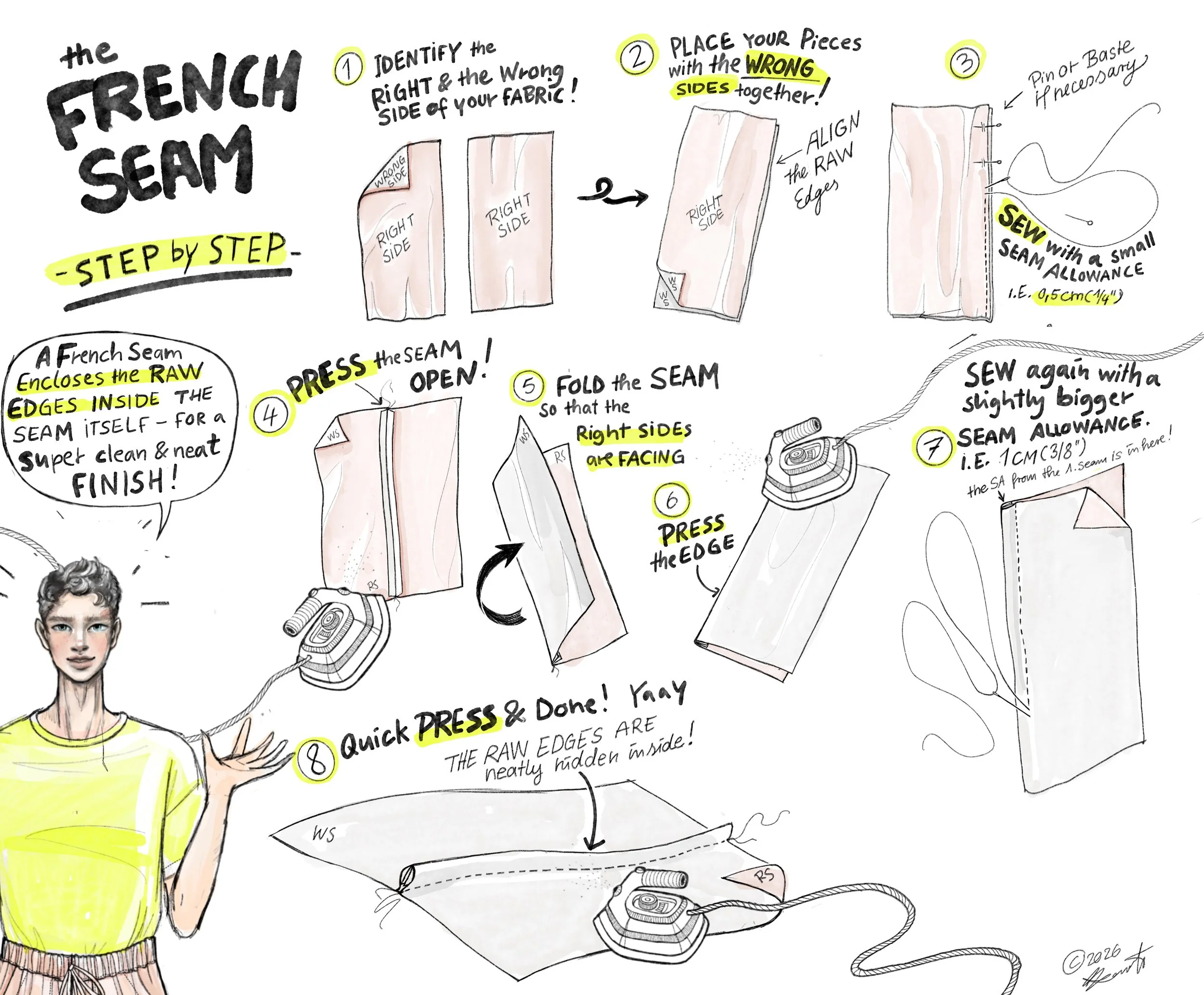
Identify the right side and wrong side of your fabric.
Place the fabric pieces with the wrong sides together.
Align the raw edges and sew a narrow seam, approximately 0.5-0.6 cm from the edge.
Press the seam open.
Fold the fabric so that the right sides are facing each other.
Press the folded edge.
Sew a second seam using a slightly larger seam allowance, approximately 1 cm.
Give the seam a final press.
The raw edges are now completely enclosed inside the seam.
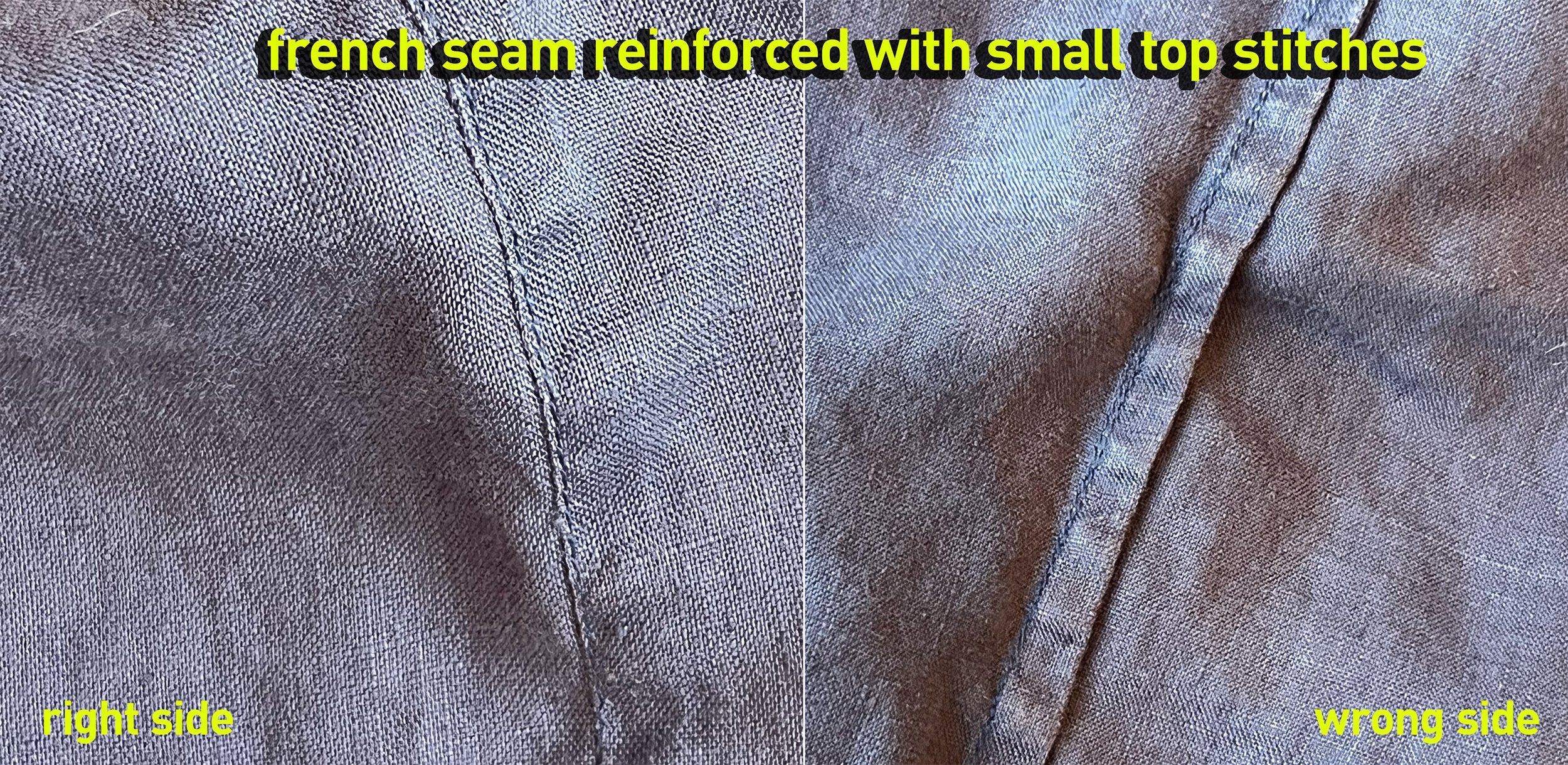
I like to reinforce my French seams with top stitching that is really close to the edge - especially for seams that get a lot of wear and tear like inseams or side seams.
A Note About Sheer Fabrics
Many sewing books describe a slightly different version of the French seam that is particularly useful for very lightweight and transparent fabrics such as chiffon, organza, georgette, voile, and fine silks.
In this method, the first seam allowance is trimmed before the second seam is sewn. Trimming reduces bulk and creates an extremely narrow, delicate seam that is almost invisible from the outside.
For cotton, linen, poplin, and other everyday woven fabrics, many sewists prefer to skip the trimming step and instead work with two carefully planned seam allowances, such as 0.5-0.6 cm followed by 1 cm. This approach is faster, easier to sew, and still produces a clean and durable French seam.
Both methods are correct and produce the same enclosed finish.
Advantages of French Seams
• Fully enclosed raw edges
• Clean finish inside and outside the garment
• No serger or overlocker required
• Durable and long-lasting
• Ideal for lightweight fabrics
• Attractive interior finish
Because the seam finish is built directly into the construction process, French seams are often associated with fine garment making and thoughtful craftsmanship.
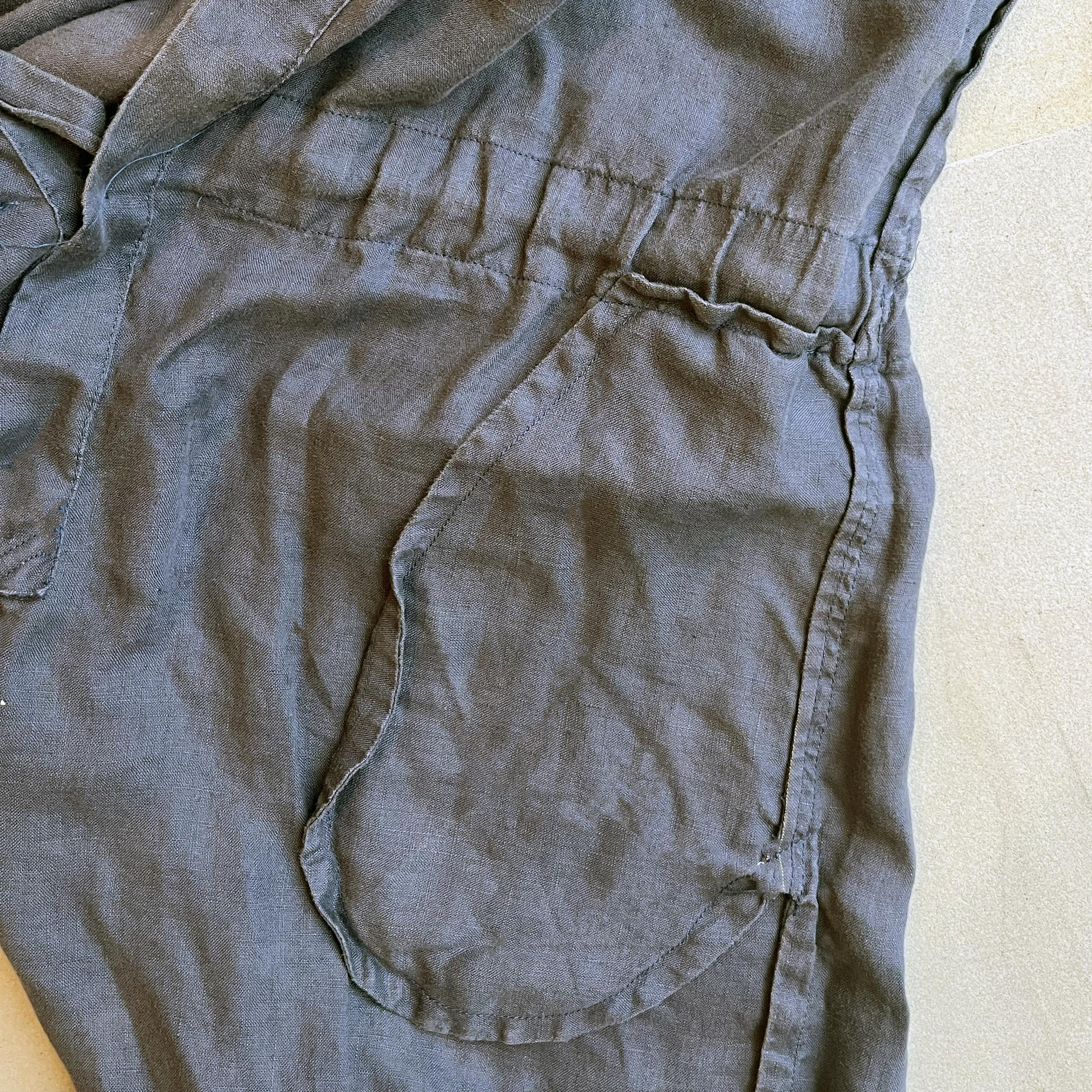
I use French seams for many of my sewing projects - this lazy jumpsuit is entirely madewith French seams - even the side seam pockets!
Limitations
French seams work best on lightweight and medium-weight fabrics.
Because the seam is folded and sewn twice, they can become bulky when used on heavy fabrics such as denim, canvas, coating fabrics, or thick wool.
For heavier materials, other seam finishes may be more suitable.
French Seam vs. Basic Seam
A basic seam joins two pieces of fabric together but leaves the raw edges exposed. These edges usually require additional finishing to prevent fraying.
A French seam combines both construction and finishing in a single technique, creating a seam that is both strong and clean without requiring a separate seam finish.
The result is a professional-looking interior that is often as attractive as the outside of the garment.
