
SEAM ALLOWANCE
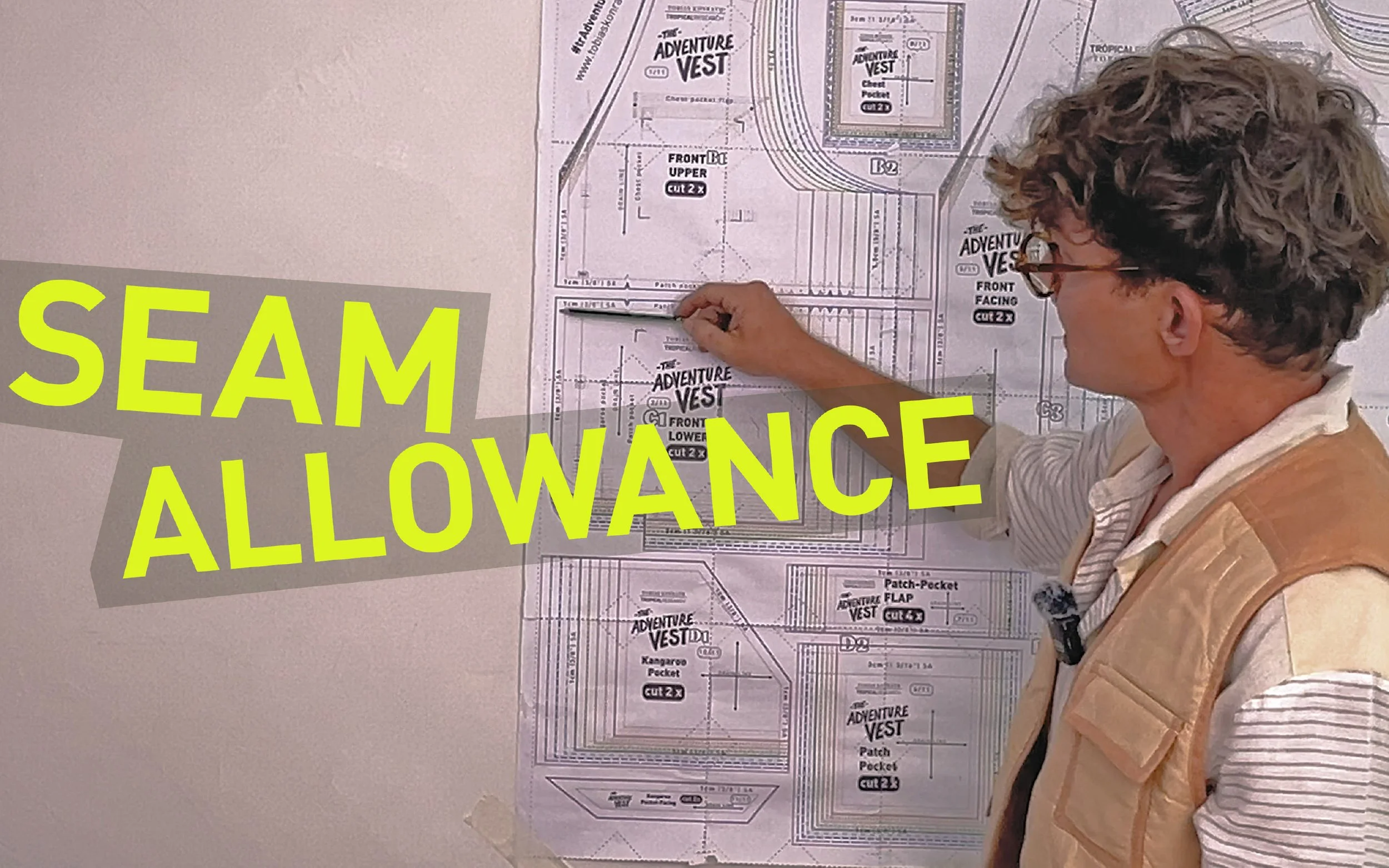
The seam allowance is the area of fabric between the stitching line and the raw edge of a pattern piece.
When two pieces of fabric are sewn together, the stitches are usually placed a certain distance away from the cut edge. This extra fabric is known as the seam allowance.
Most sewing patterns include seam allowances, although some drafting systems and commercial patterns require them to be added separately.
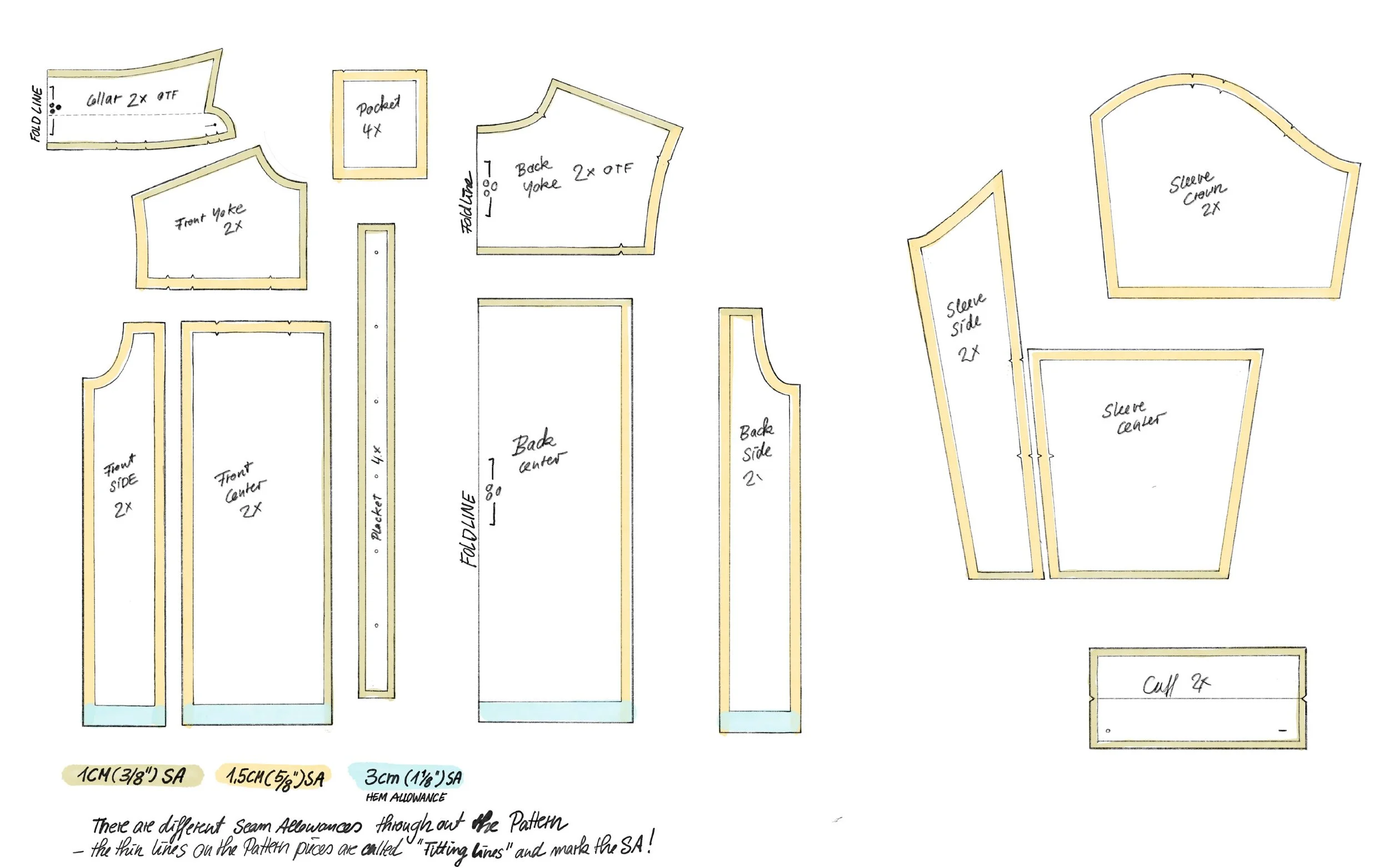
In this seam allowance/pattern pieces overview of the Adventure Shirt Pattern the Seam Allowances are highlighted in green and Yellow and the Hem Allowance in blue. Depending on the finish and function of the seam the SA varies between 1cm (⅜”) and 1.5cm (⅝”) the Hem Allowance is 3 cm (1 1/8”)
Why Seam Allowance Matters
Seam allowance provides space for construction and affects both the appearance and fit of a finished garment.
Without a seam allowance, there would be no fabric available to join pattern pieces together.
Seam allowances also allow for:
garment assembly
fitting adjustments
seam finishes
reinforcement
pressing and shaping
Even small changes to seam allowance can affect the final size of a garment.
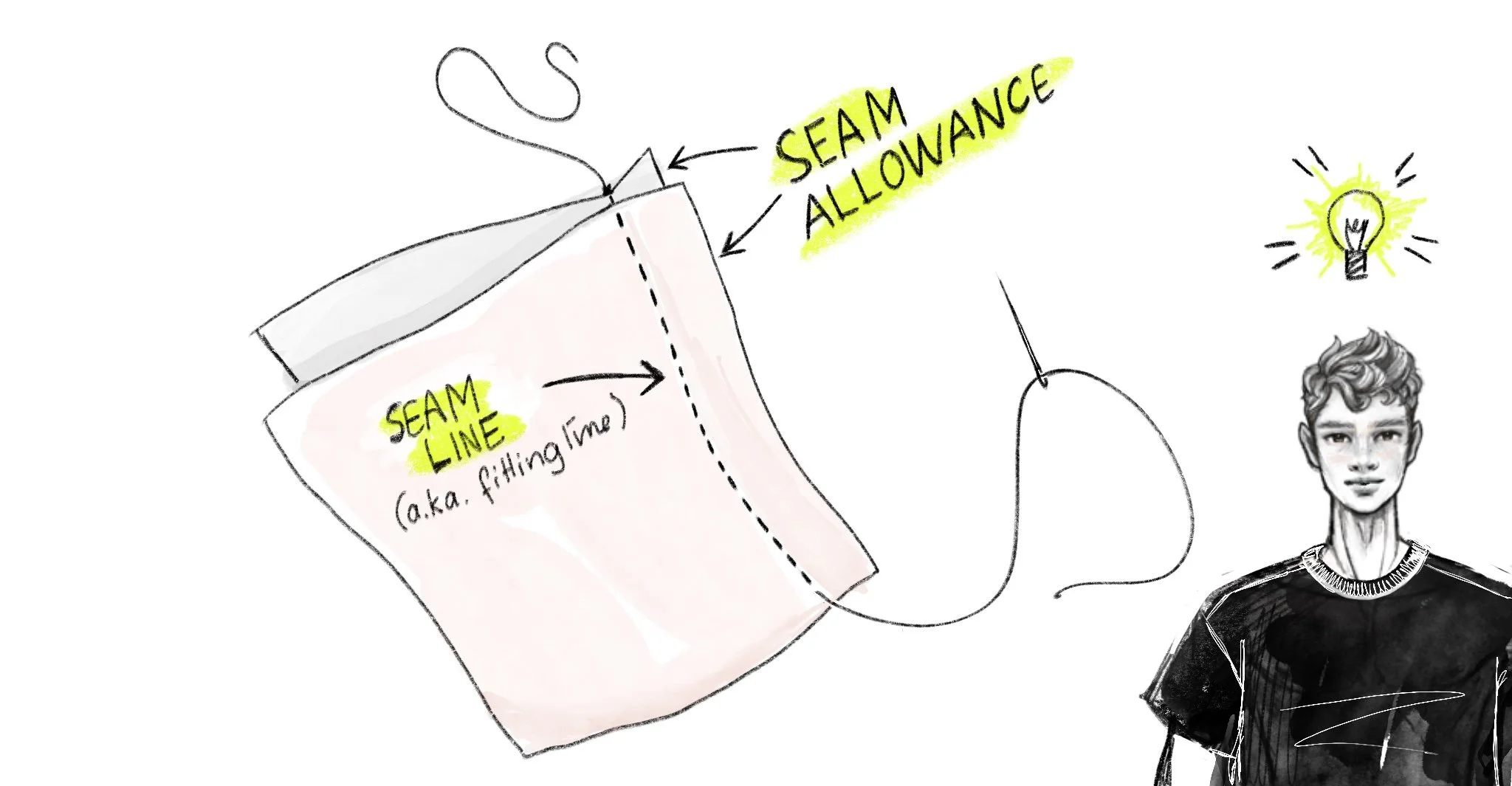
Seam Line vs Seam Allowance
It is helpful to distinguish between two related terms:
Seam Line
The seam line is the line where the stitching is sewn.
Seam Allowance
The seam allowance is the fabric located between the seam line and the raw edge.
In most sewing patterns, the garment is drafted to the seam line. The seam allowance is added afterward to provide space for construction.
“The seam line determines the garment. The seam allowance makes it sewable”
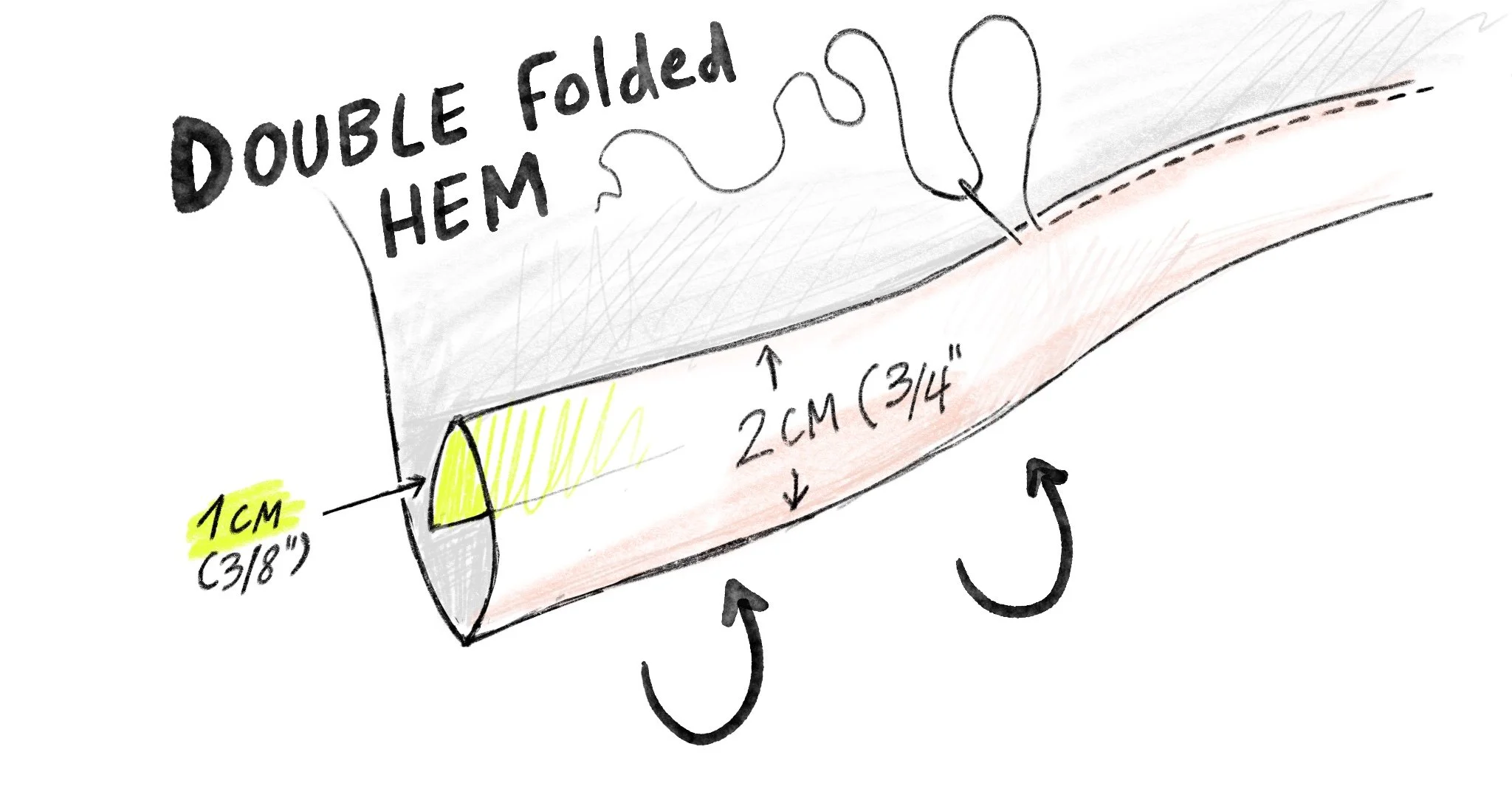
A classic double folded hem i.e. for shirts 2cm(¾”) + 1cm(⅜”), total hem allowance was 3cm(1 ⅛”)
A Note About Hem Allowances
Hem allowances and seam allowances are not always the same thing.
A seam allowance is the extra fabric added beyond the stitching line so two pieces can be joined together. In many sewing patterns, this might be 1 cm or 1.5 cm.
A hem allowance is the extra fabric added to an edge that will be folded and finished. Since hems are often folded twice to hide the raw edge, they usually require more fabric than a standard seam allowance.
For example:
• Seam allowance: 1.5 cm
• Hem allowance: 3 cm
A 3 cm hem allowance can be folded up by 1.5 cm and then folded again by another 1.5 cm, creating a neat double-fold hem with no visible raw edges.
Always check the pattern instructions, as different garments and finishing methods may use different hem allowances.
Common Seam Allowances
Different sewing patterns use different seam allowance widths.
Common examples include:
6 mm (¼”) seam allowance
10 mm (⅜”) seam allowance
15 mm (⅝”) seam allowance
20 mm or larger for fitting and alterations
Some projects may even use multiple seam allowance widths within the same garment.
Included vs Not Included
Always check whether a sewing pattern includes seam allowances.
Many modern PDF sewing patterns such as tropicalresearch include them by default, while some drafting systems and commercial patterns require the sewist to add seam allowances before cutting.
This information is usually stated in the pattern instructions.
Choosing a Seam Allowance
The ideal seam allowance depends on:
fabric type
sewing technique
desired finish
garment style
For example, French seams often require wider seam allowances than a simple basic seam.
Very bulky fabrics may also benefit from larger seam allowances to allow easier construction and trimming.
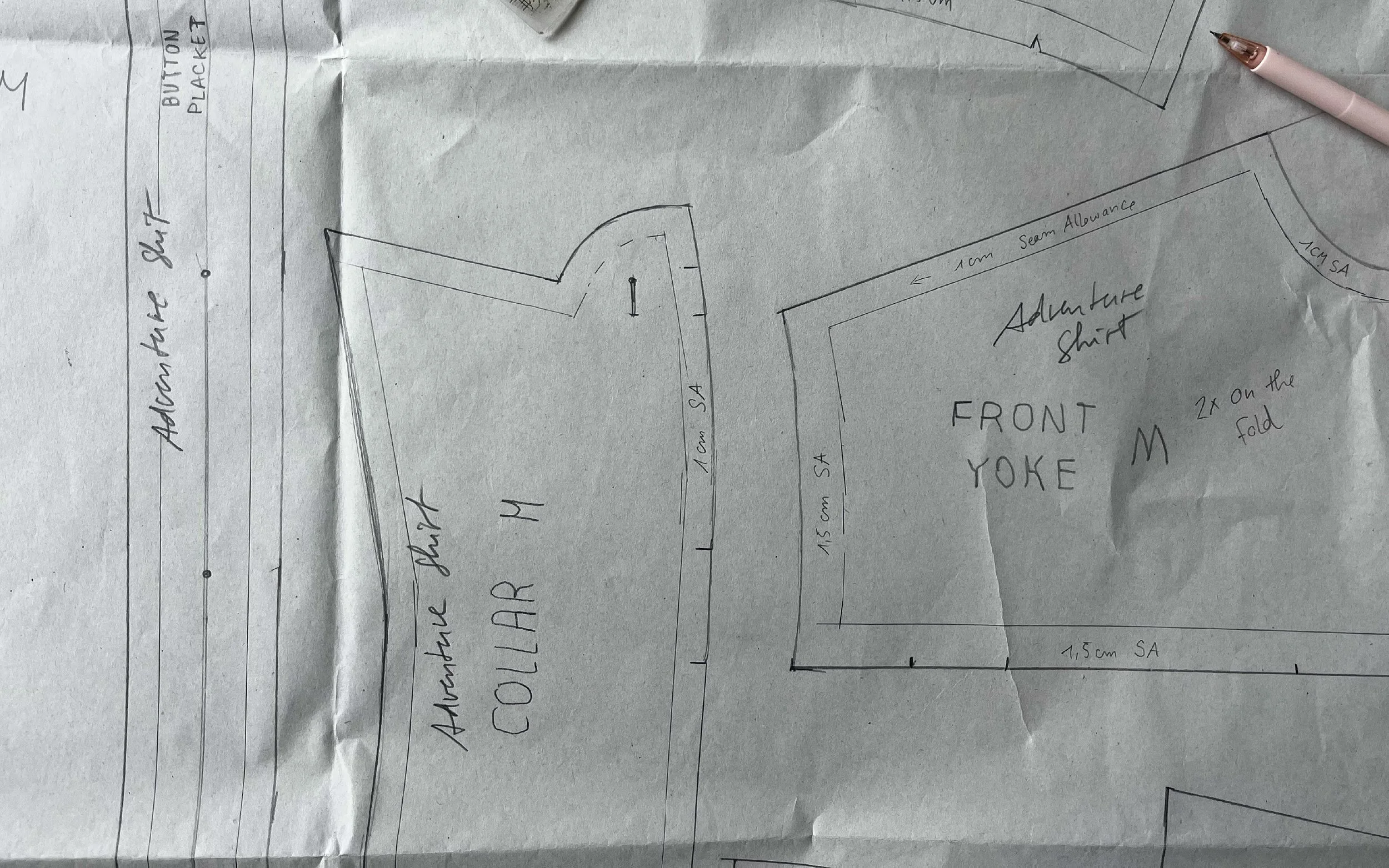
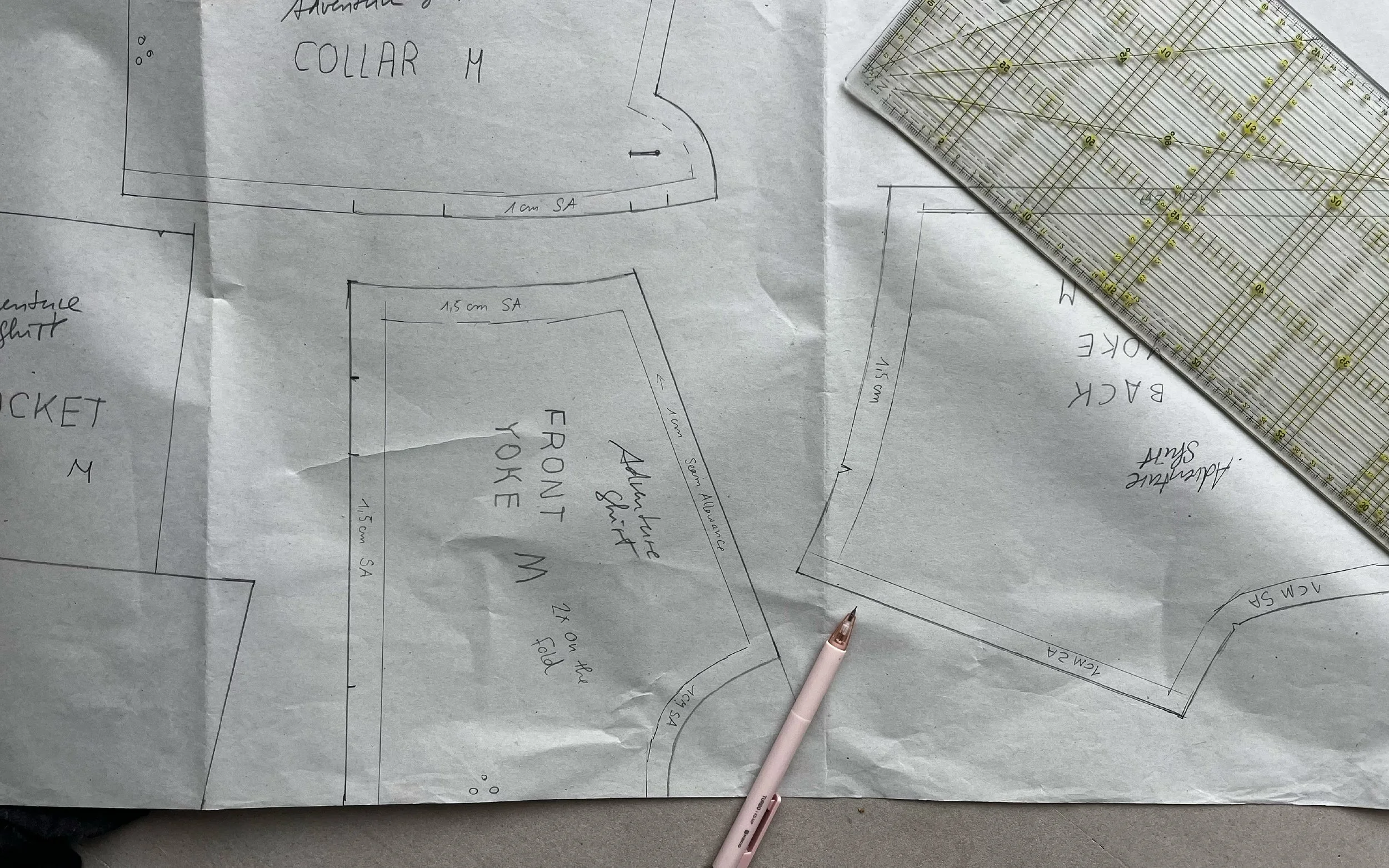
I like to mark the seam lines/seam allowances on my pattern - these are the pattern pieces for a size M Adventure Shirt that I traced from the multi size pattern sheet.
Beginner Tip
Before cutting your fabric, confirm that the seam allowance shown in the instructions matches the seam allowance used during sewing.
Many fitting problems are caused not by the pattern itself, but by sewing with a seam allowance that is wider or narrower than intended.
A consistent seam allowance is one of the easiest ways to improve accuracy and achieve predictable results.
