
PINNING
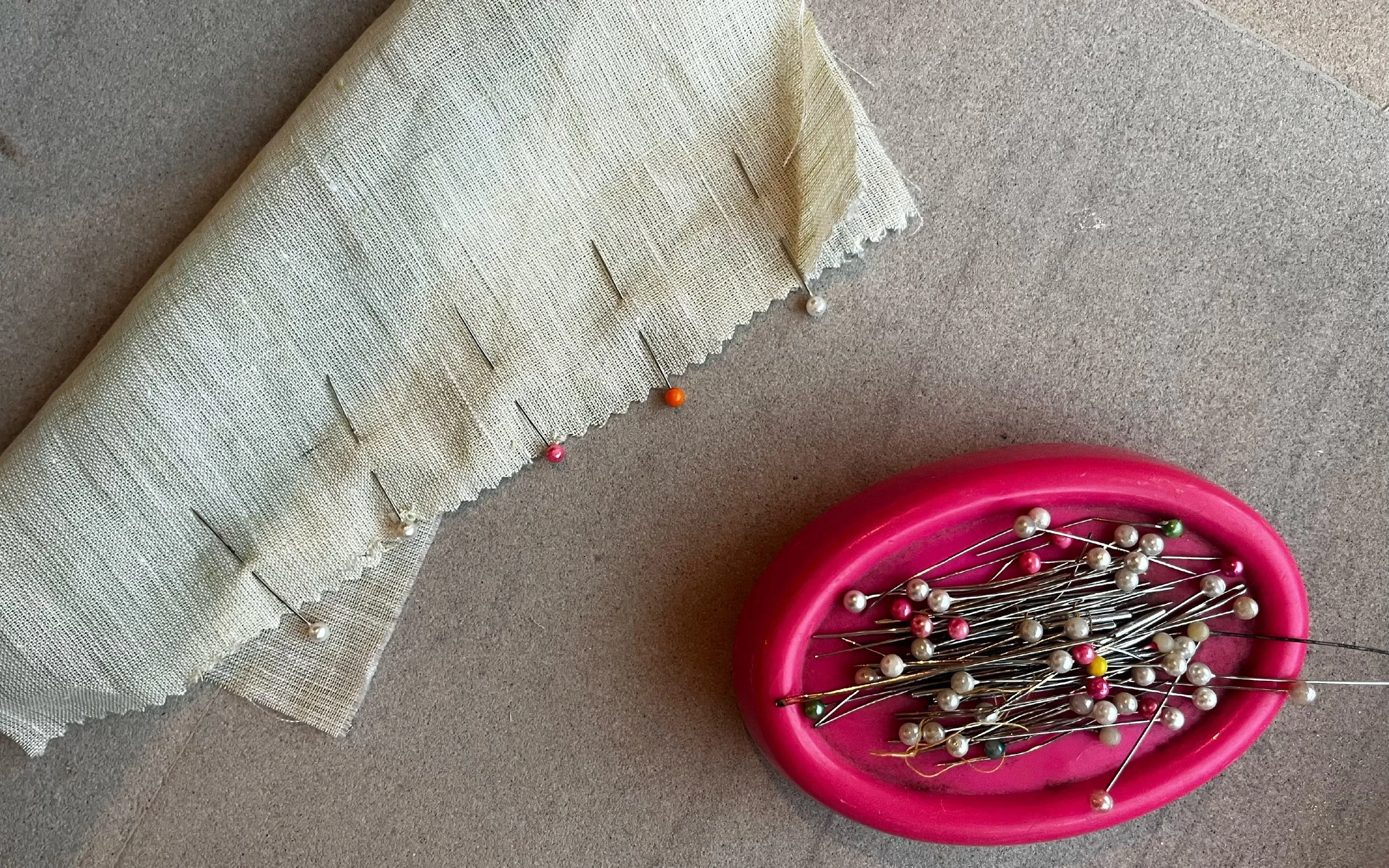
Pinning
is the process of temporarily holding fabric layers together before sewing (similar to basting). Pins help keep fabric pieces aligned, prevent shifting, and make it easier to sew accurate seams.
Although pinning is often considered a simple preparation step, it plays an important role in garment construction. Careful pinning can help ensure that seams match correctly, curved edges remain smooth, and important details such as pockets, collars, and waistbands stay properly positioned during sewing.
While some experienced sewists may use fewer pins on simple projects, pinning remains one of the most effective ways to improve accuracy and reduce mistakes, especially when learning to sew.
Why Do We Pin Fabric?
Fabric naturally shifts as it is handled, moved, and sewn through a sewing machine. Even small amounts of movement can cause edges to become misaligned.
Pinning helps to:
• Keep fabric layers aligned
• Prevent shifting while sewing
• Match notches and markings accurately
• Hold curved seams in place
• Position pockets, collars, cuffs, and other details before stitching
• Improve overall sewing accuracy
Taking a few moments to pin carefully can often save time later by reducing the need to unpick and correct mistakes.
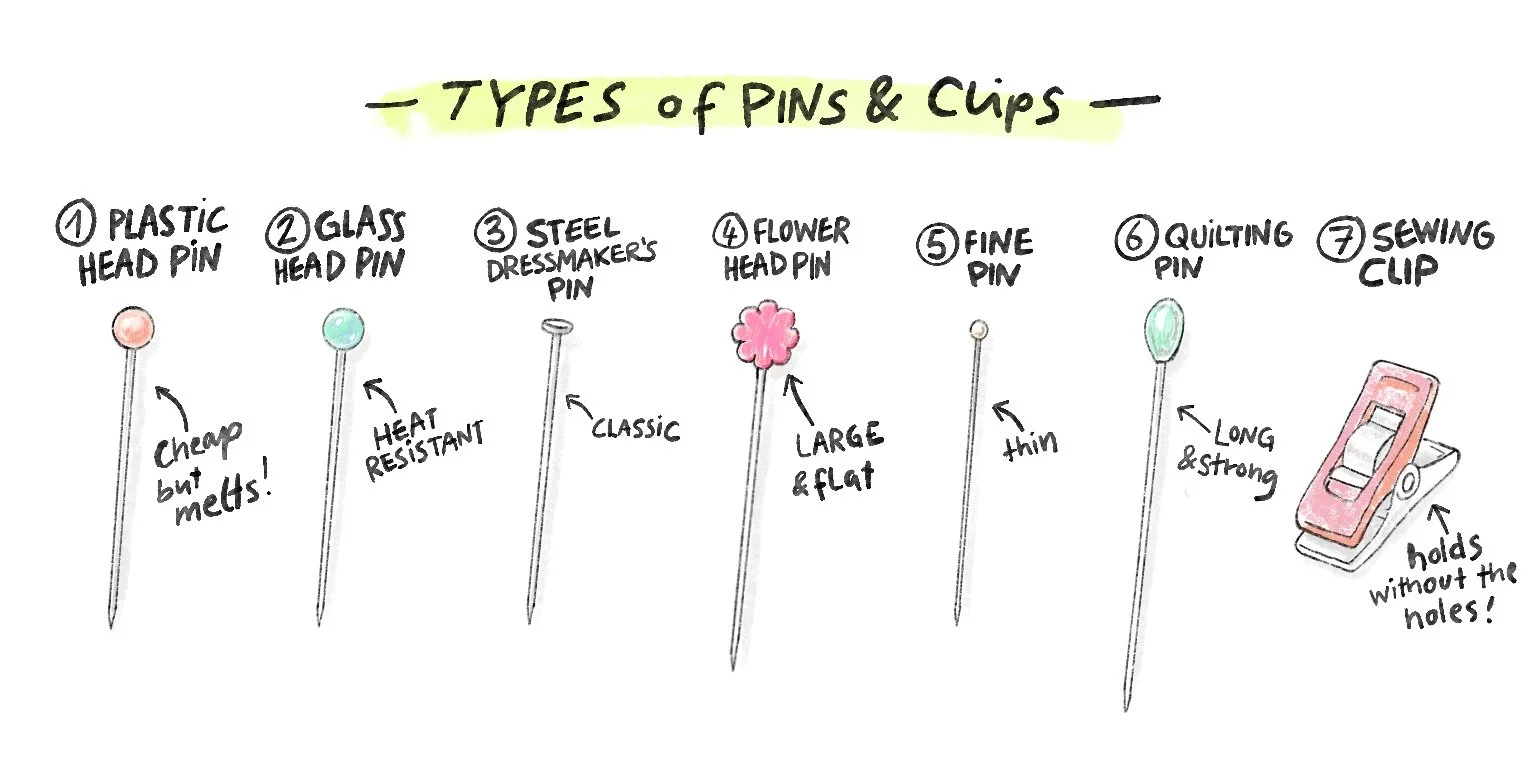
Types of Pins
Sewing pins are available in a variety of styles designed for different fabrics and applications.
(1) Plastic Head Pins
Plastic head pins are among the most common sewing pins available worldwide. They feature a thin metal shaft with a small coloured plastic bead at the end, making them easy to see and handle while sewing.
They are inexpensive, widely available, and suitable for most general sewing projects.
(2) Glass Head Pins
Glass head pins are a popular choice for garment sewing. Their coloured heads make them easy to see and handle, while the heat-resistant glass heads can safely withstand ironing temperatures.
They are commonly used for dressmaking, quilting, and general sewing projects where pressing is required during construction.
(3) Steel Dressmaker’s Pins
Steel dressmaker’s pins are traditional sewing pins with a small metal head. They are durable, fine, and suitable for a wide range of garment sewing tasks.
Their slim profile allows them to pass through fabric layers easily, making them a versatile choice for general sewing. These classic pins have been used by sewists for generations and are still widely available today.
(4) Flower Head Pins
Flower head pins feature a flat, flower-shaped head that makes them easy to see, handle, and remove while sewing. The large head provides a comfortable grip and remains visible even when working with multiple fabric layers.
They are particularly popular for pattern cutting, quilting, and pinning long seams. Their flat shape also helps them lie neatly against the fabric without rolling around on the work surface.
Many flower head pins are heat resistant, making them suitable for use near an iron during pressing.
The bright colours and distinctive shape make flower head pins a favourite among many sewists and quilters.
(5) Fine Pins
Fine pins are thinner than standard sewing pins and are often used for lightweight fabrics such as silk, rayon, lawn, or fine cottons. Their slim profile helps minimise visible pin marks.
(6) Quilting Pins
Quilting pins are longer than standard sewing pins and are designed for working with thicker materials or multiple fabric layers.
Their additional length makes them easier to insert and remove when handling bulky projects such as quilts, padded garments, bag making, or layered sewing projects.
(7) Sewing Clips
Many modern sewists also use sewing clips as an alternative to traditional pins.
Unlike pins, clips do not pierce the fabric. Instead, they hold layers together using gentle pressure. Clips are particularly useful for thick fabrics, multiple layers, cork, leather, vinyl, laminated fabrics, or any material where pin holes may be undesirable.
Both pins and clips serve the same purpose: temporarily holding fabric pieces together before sewing.
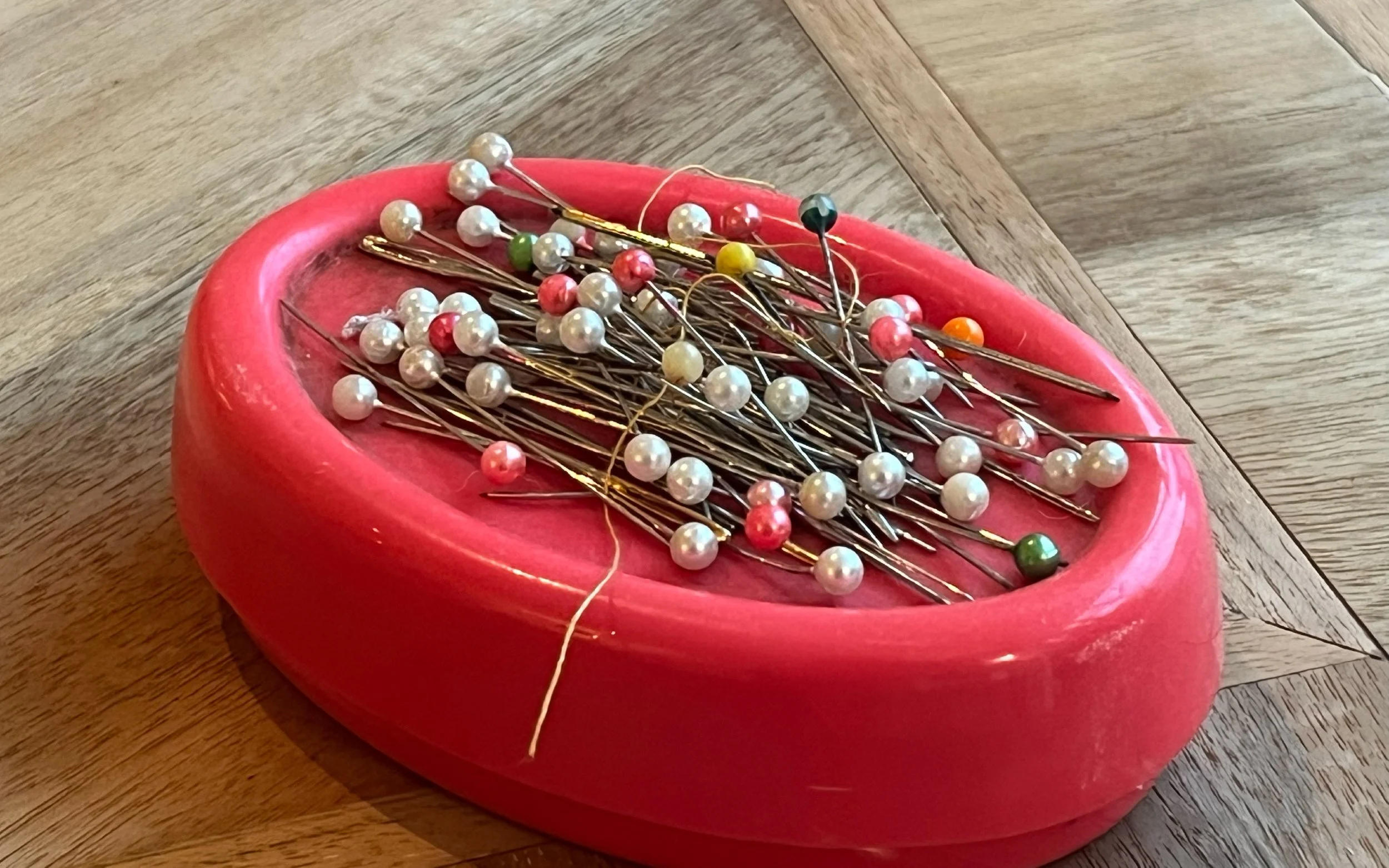
these in expensive plastic bead pins are widely available in Asia and do a pretty decent job until you accidentally iron it...
Pinning Tips
• Match important markings and notches first.
• Use more pins on curves than on straight seams.
• Avoid stretching the fabric while pinning.
• Pin fabric smoothly and evenly.
• Remove pins before the sewing machine needle reaches them.
• Store pins carefully and replace bent or damaged pins when necessary.
Pinning Direction
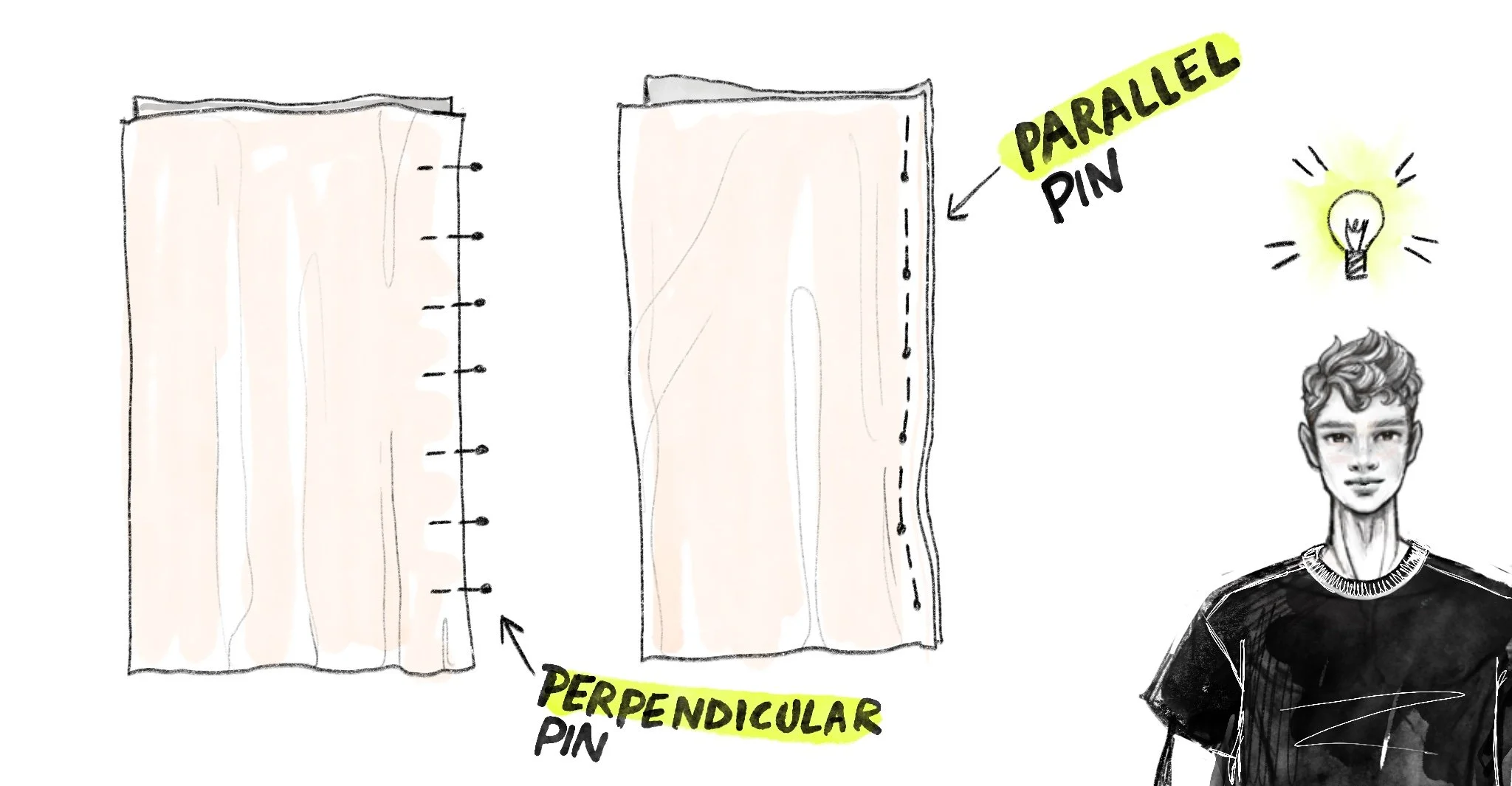
Many sewists place pins perpendicular to the seam line. This makes the pins easy to remove while sewing and helps keep the fabric layers aligned.
Others prefer to place pins parallel to the seam. Both methods are widely used, and the best approach often comes down to personal preference and the type of project being sewn.
The most important goal is to keep the fabric stable and accurately aligned until it has been permanently stitched together.
