
RIGHT SIDE vs. WRONG SIDE
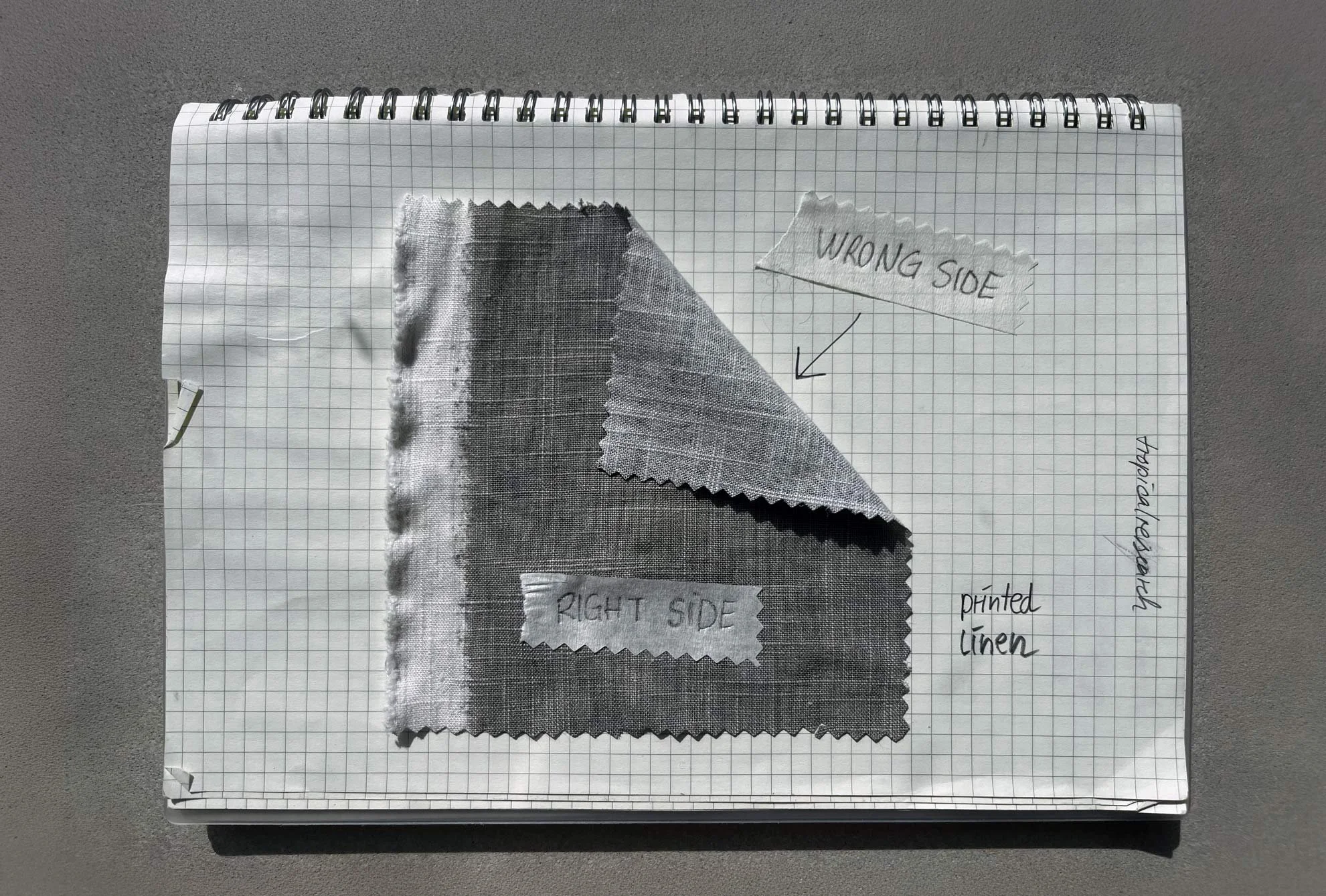
woven linen with a printed right side and lighter wrong side
Right Side vs Wrong Side of Fabric
When sewing garments, fabrics usually have two different sides: the right side and the wrong side.
The right side (RS) is the part intended to face outward on the finished garment, while the wrong side (WS) sits against the body or inside the construction.You will usually see it abbreviated to RS & WS. Sometimes the right side is also called the fabric face.
Learning to identify fabric sides is one of the first important beginner skills. Correctly orienting pattern pieces helps maintain a consistent appearance and prevents mismatched panels during sewing.
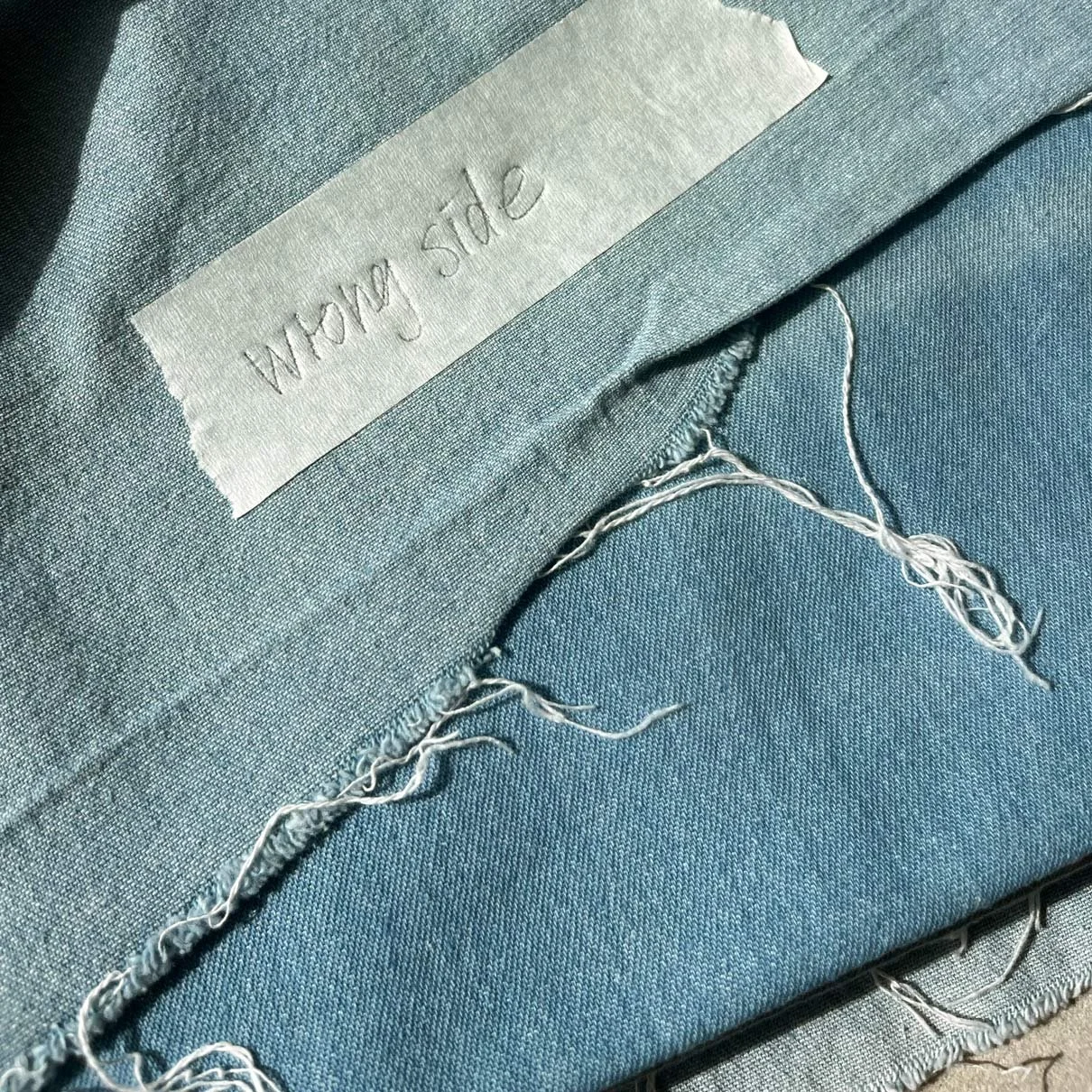
The wrong side of denim is always lighter and has a different structure than the right side, which usually shows the typical diagonal lines that come from the twill weave.
Why It Matters
Many fabrics look very similar on both sides, especially plain woven cottons or linens. Others have a clearly visible front and back due to texture, print, sheen, or weave structure.
Using different sides accidentally can result in:
uneven colour or texture
inconsistent light reflection
visible construction differences
mismatched garment panels
This becomes especially noticeable with satin, denim, twill, velvet, brushed fabrics, and printed textiles. However, experimenting with the different sides can also lead to interesting effects and change the look.
How to Identify the Right Side
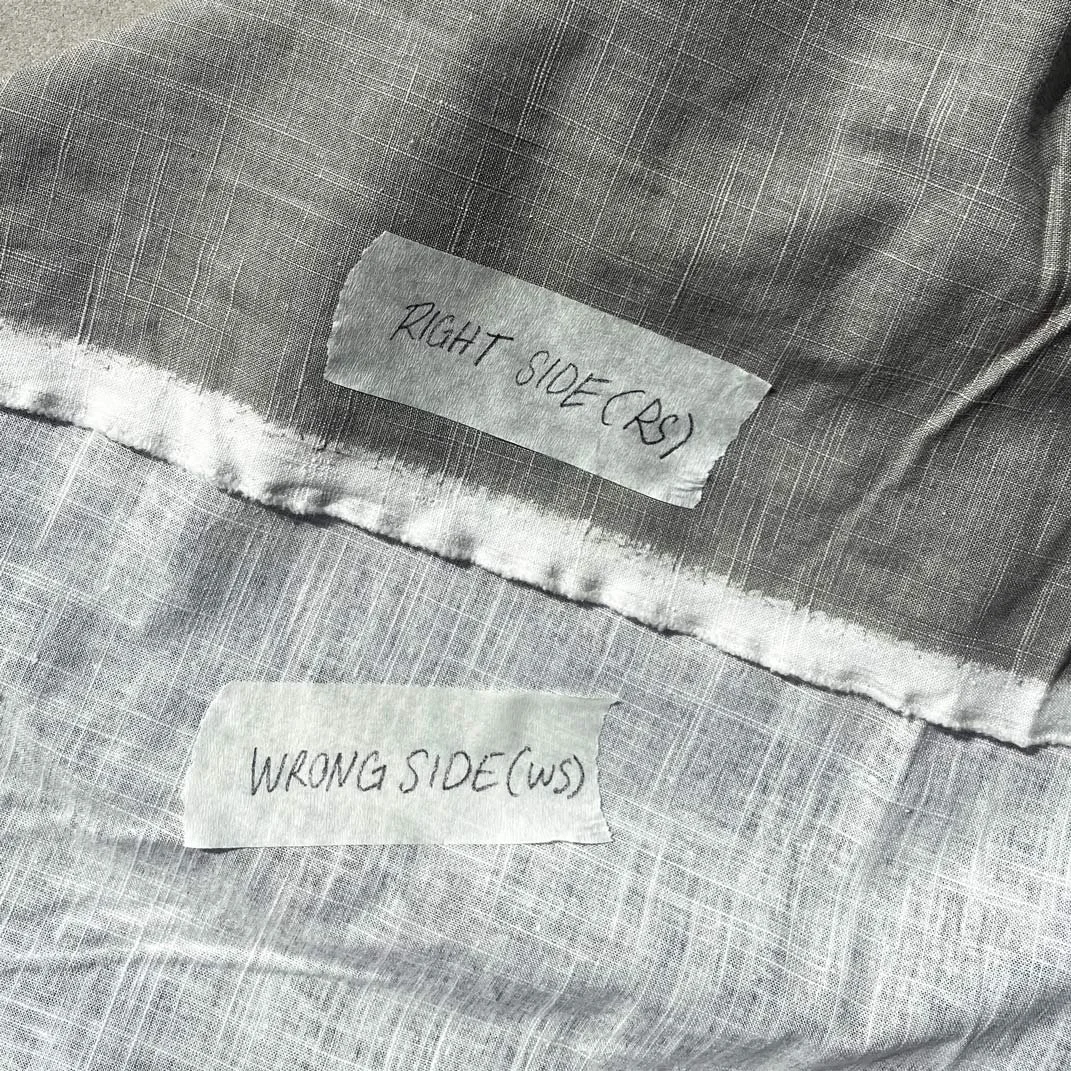
There are several common ways to determine the fabric right side:
Printed fabrics usually have a more vibrant print on the right side.
Textured fabrics often place the texture on the outside.
Selvage holes may appear smoother on the right side and slightly raised on the wrong side.
Twill fabrics such as denim often show a more pronounced weave direction on the front.
Satin and shiny fabrics typically place the smoother, shinier surface outward.
most knits have different textures on the right and on the wrong side. I.e. French Terry is smooth on the right and fluffy/looped on the wrong side
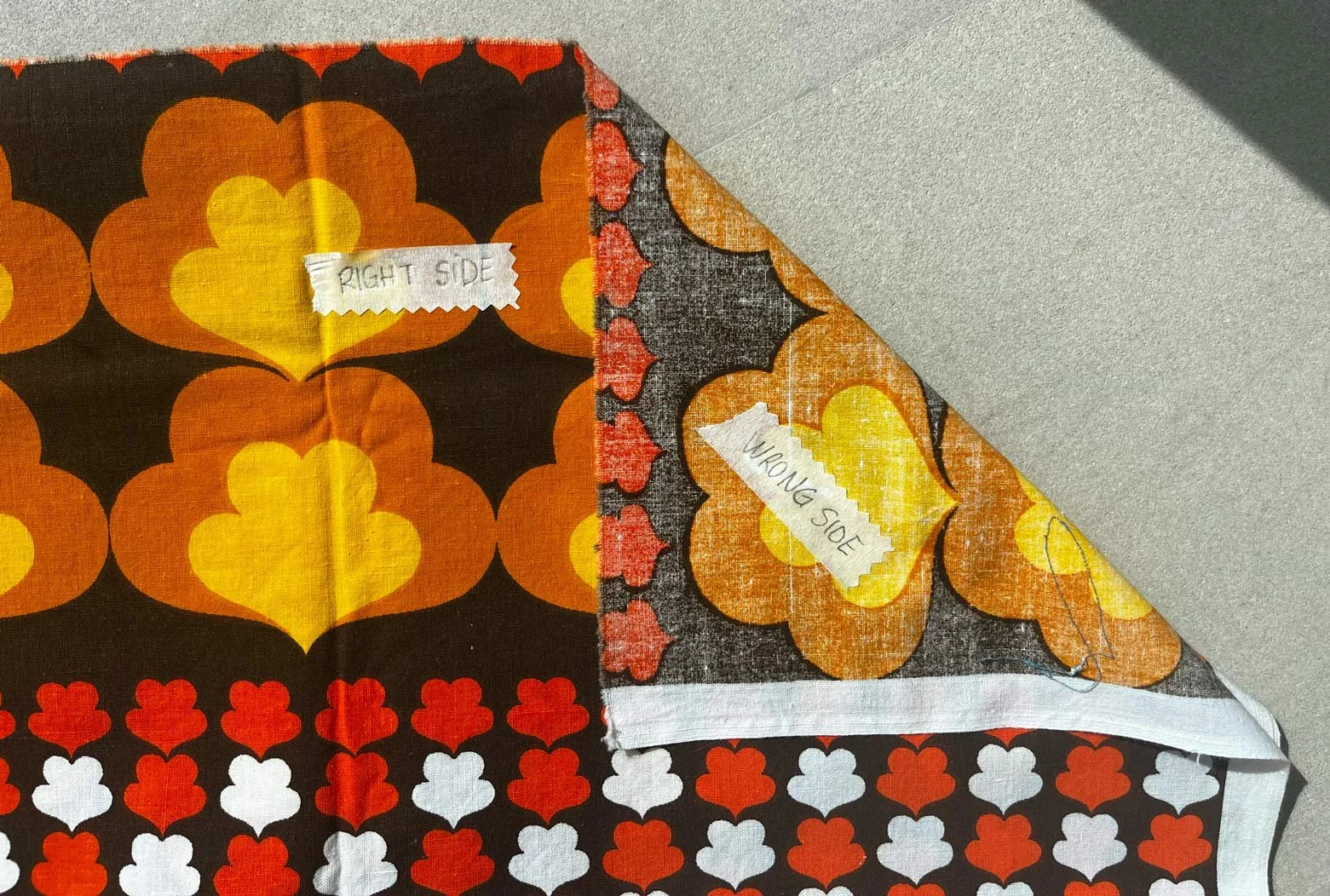
Vintage printed cotton with a vibrant right side and faded wrong side - due to the print not fully penetrating through the fibers.
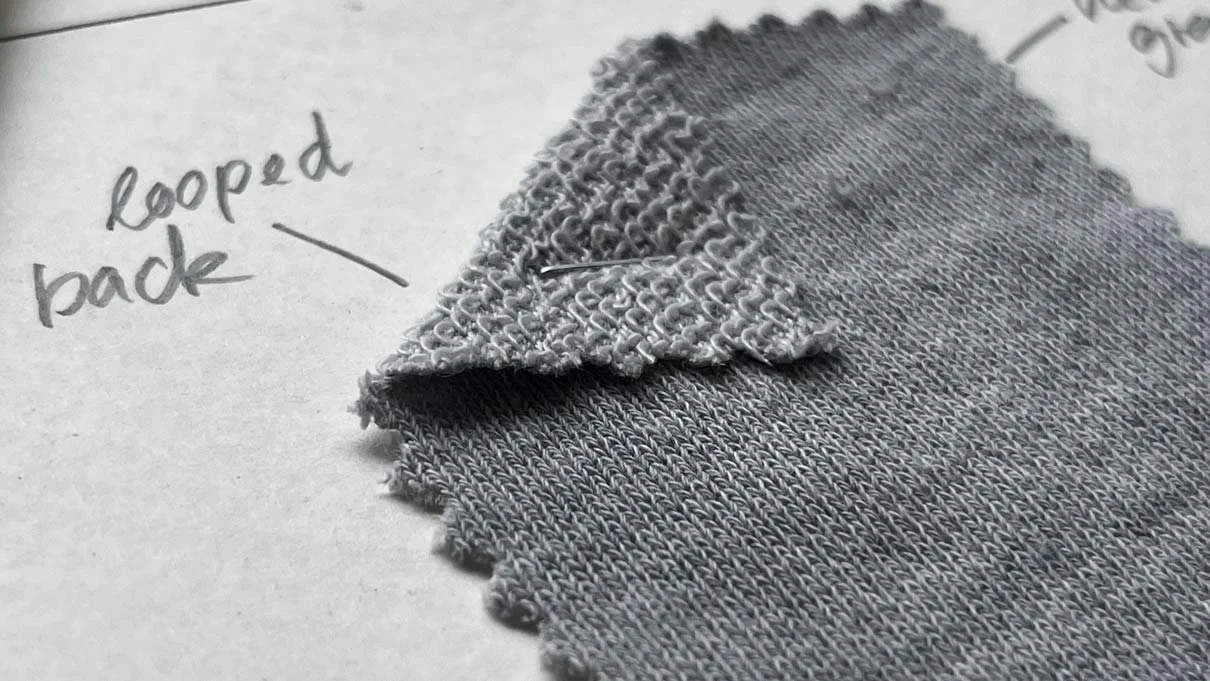
French Terry with a looped wrong side
If both sides look nearly identical, it often does not matter which side you choose - as long as you stay consistent throughout the project.
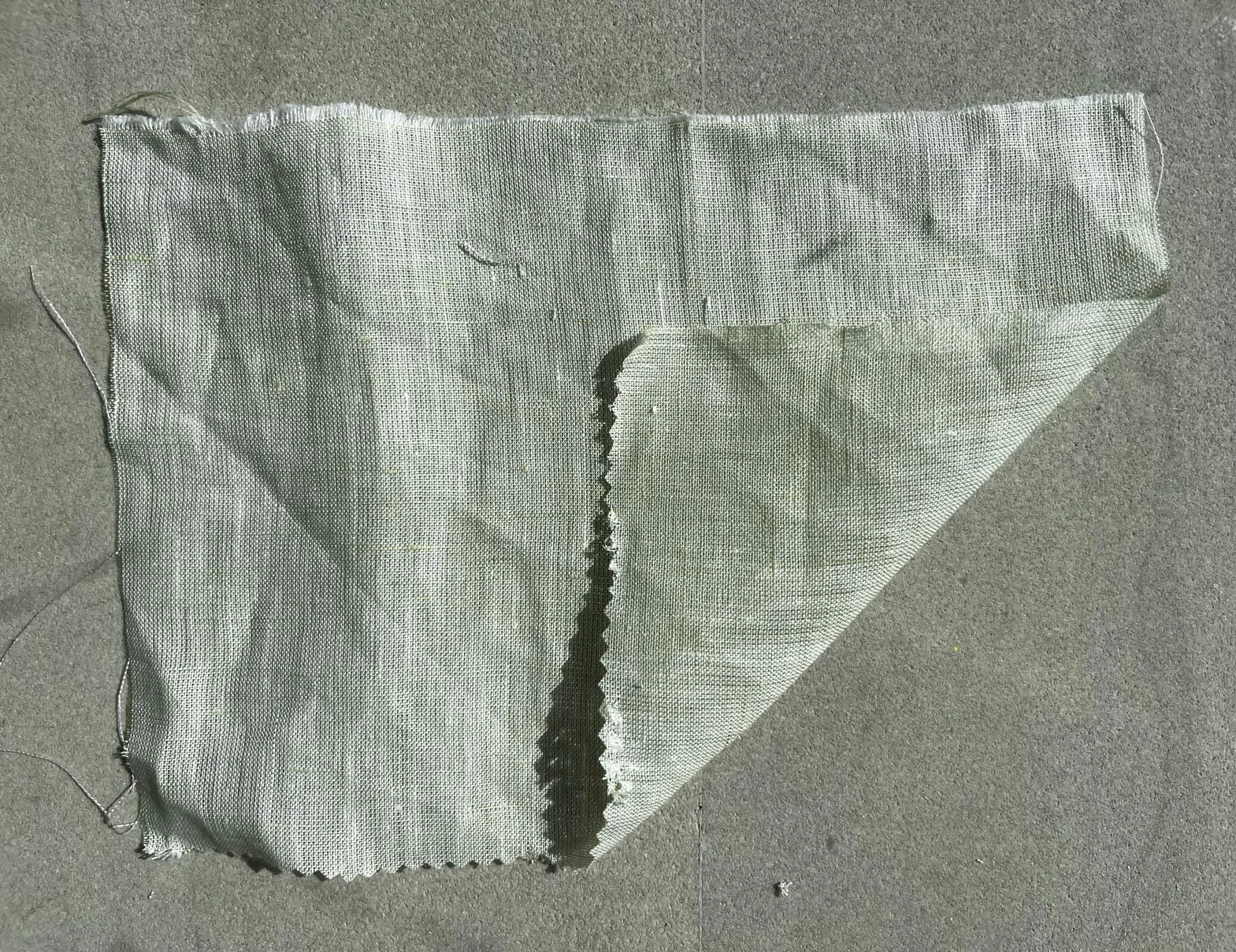
plain woven linen with similar RS and WS
Common Beginner Confusion
Some fabrics are intentionally reversible and can be used from either side. Double gauze, washed linen, muslin, and certain knits may not have a clearly defined front or back.
In these cases, sewists often choose the side they personally prefer and mark it with chalk or a small safety pin before cutting.
Beginner Tip
Before cutting your fabric, unfold it completely and inspect it in natural light. Small differences in texture, colour, or sheen are often easier to spot this way.
If you are unsure, choose one side and stay consistent throughout the entire project
