
FABRIC GRAIN
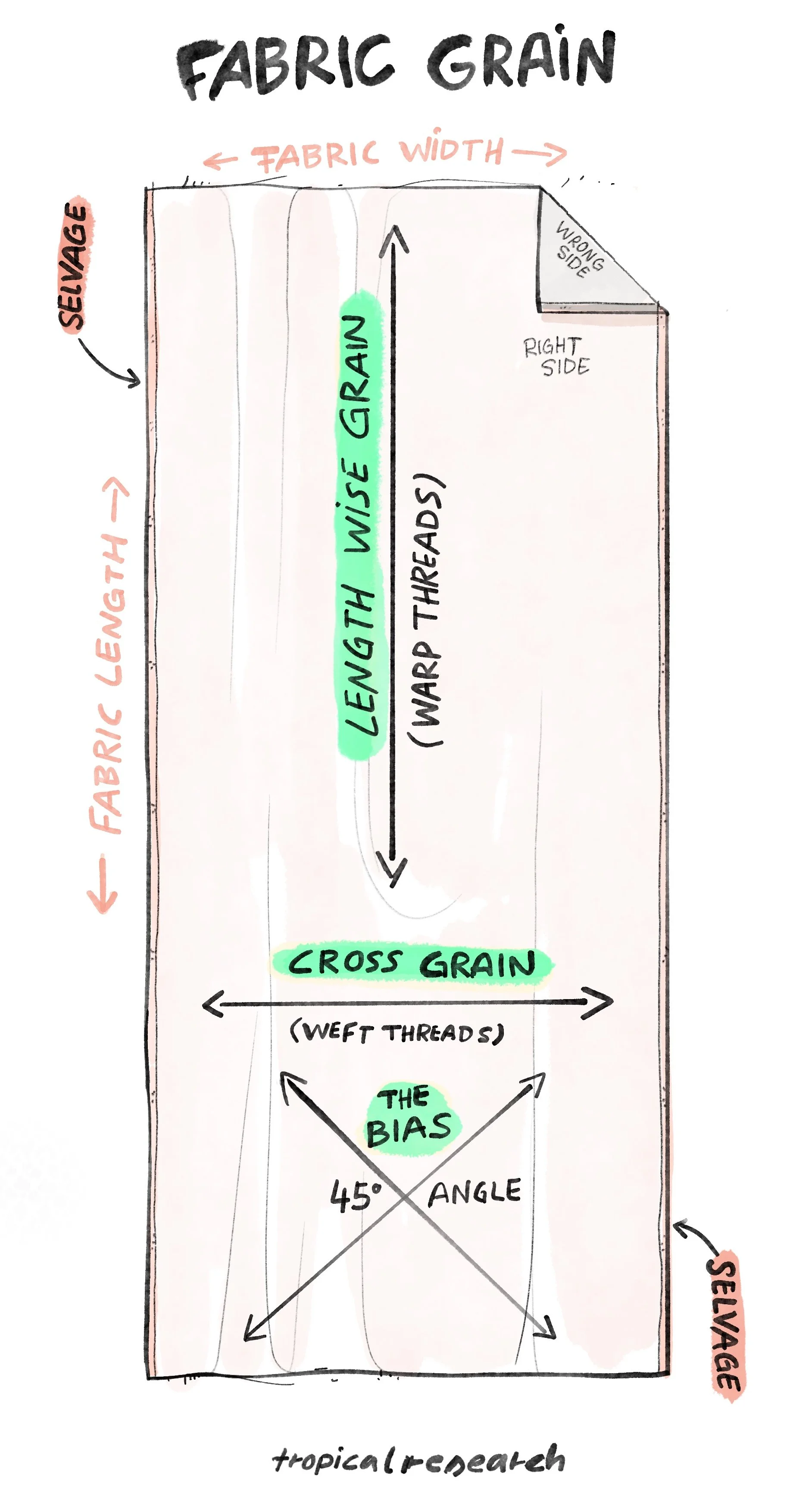
Fabric grain refers to the direction of the threads within a woven fabric. Understanding grain is one of the most important foundations in garment sewing because it affects how fabric hangs, stretches, twists, and behaves during construction.
Most woven fabrics are made from two sets of threads:
warp threads running lengthwise along the fabric roll
weft threads running across the width of the fabric
These thread directions create the fabric grain.
Types of Grain
Lengthwise Grain
The lengthwise grain runs parallel to the selvage of the fabric. This direction is usually more stable and has the least stretch.
Most garment pattern pieces are designed to be cut along the lengthwise grain to ensure proper drape and fit.
Crosswise Grain
The crosswise grain runs perpendicular to the selvage from one side of the fabric to the other.
This direction often has slightly more flexibility and softness than the lengthwise grain.
Bias Grain
The bias runs diagonally across the fabric at a 45-degree angle to the warp and weft threads.
Fabric cut on the bias has more stretch and fluidity, allowing garments to drape closely around the body. Bias-cut garments often feel softer and more flexible.
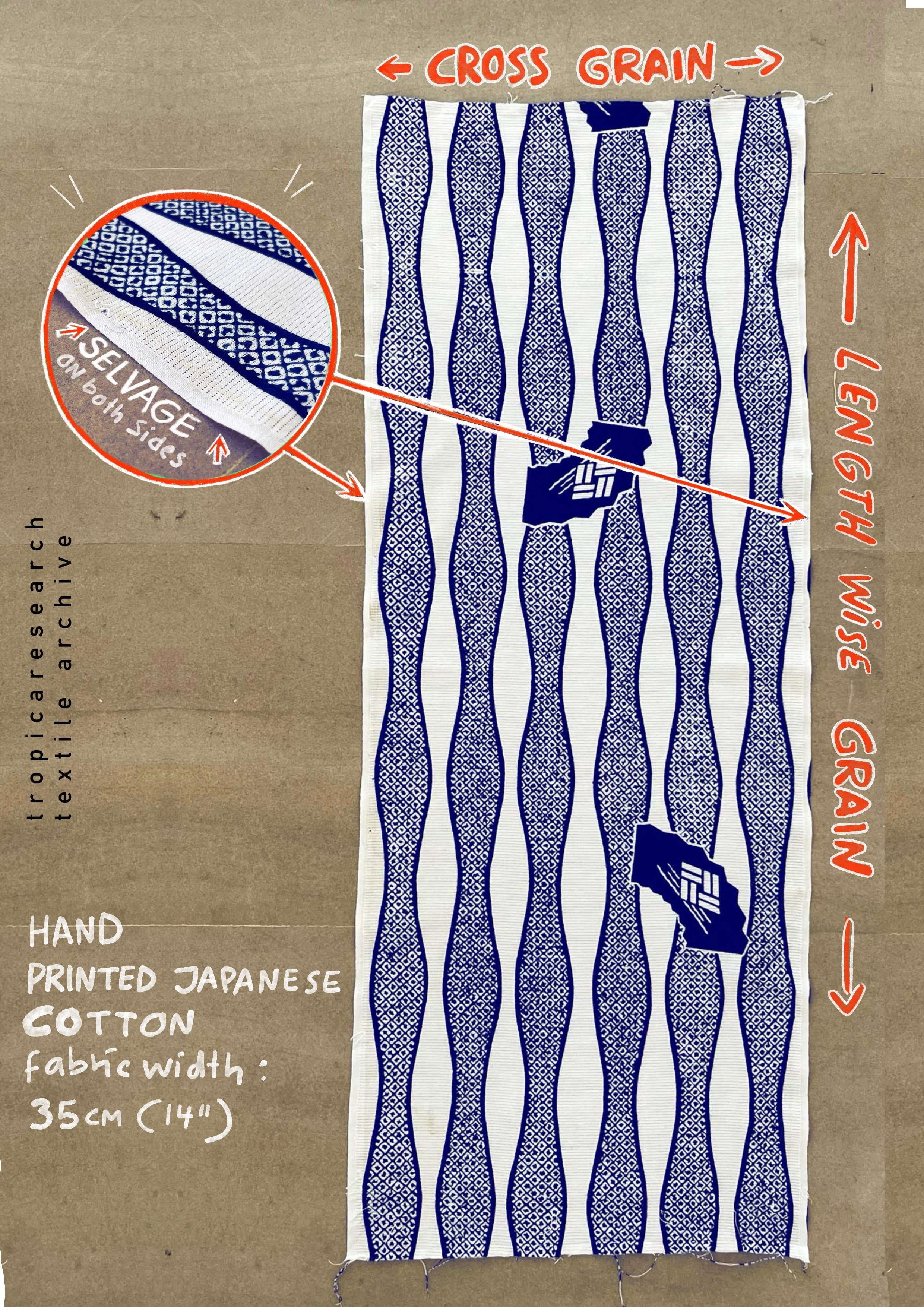
Japanese fabrics tend to be quite narrow so it’s easy to identify the grain directions, the lengthwise grain follows the selvages , where as the cross grain follows the fabric width.
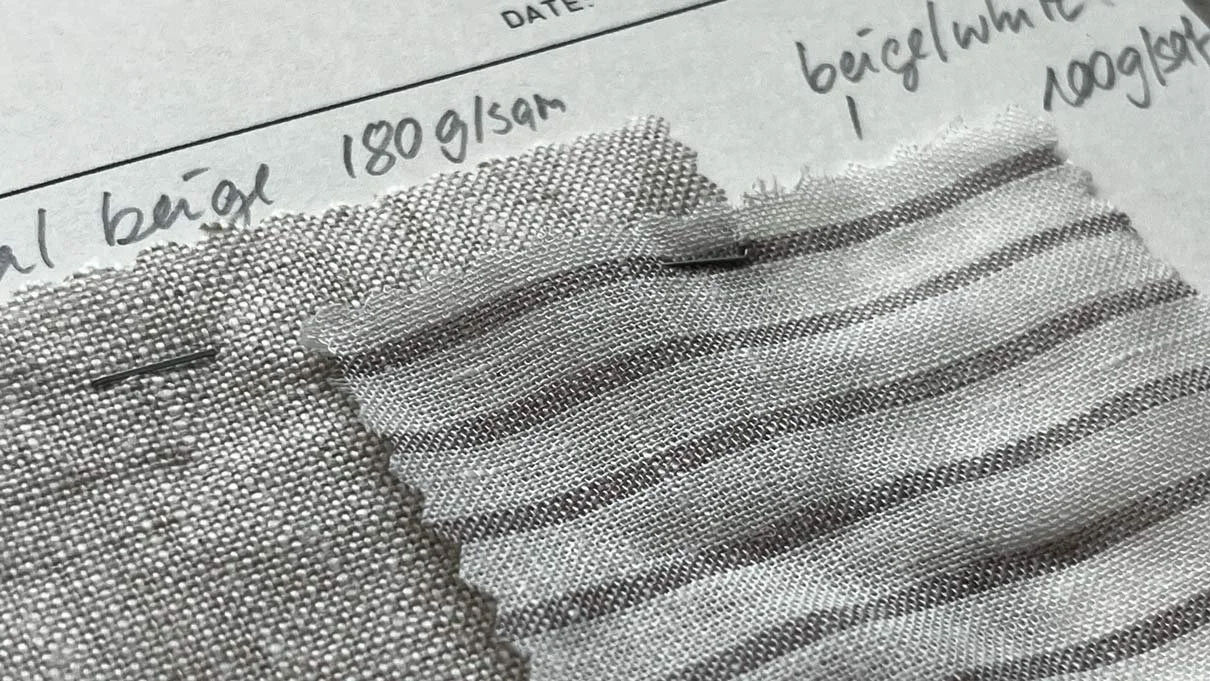
Close up of plain woven linen with visible warp and weft threads
Why Grain Matters
Cutting pattern pieces off-grain can cause garments to:
twist during wear
stretch unevenly
hang incorrectly
shift after washing
develop distorted seams
Even small grain inaccuracies can become very noticeable in long seams, wide legs, button plackets, or oversized garments.
Finding the Grain
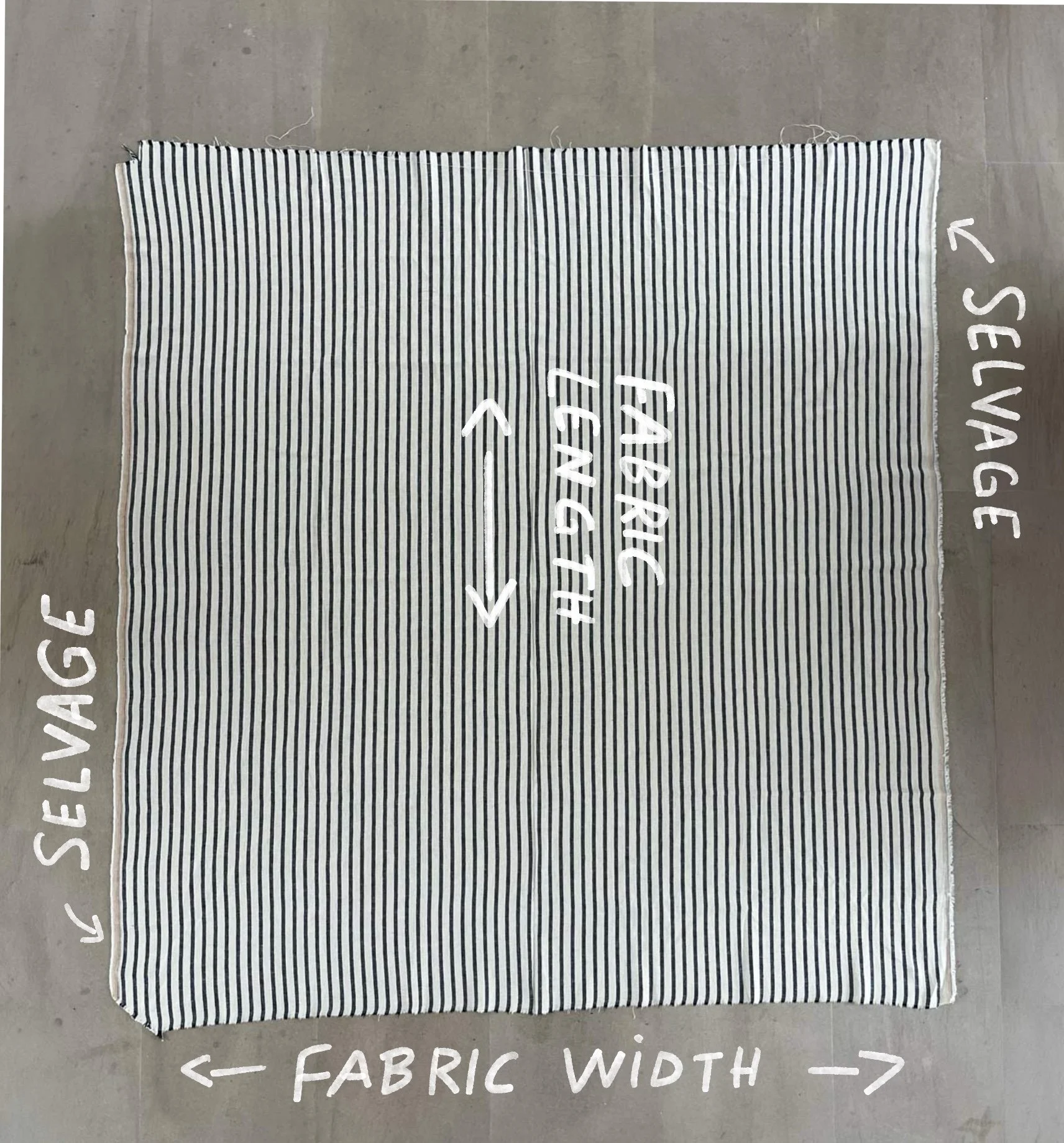
The easiest way to identify the grainline is by using the selvages.
The lengthwise grain always runs parallel to the selvage.
If the fabric has become distorted or warped, the grain can sometimes be corrected by gently pulling the fabric diagonally or by straightening crosswise threads before cutting.
Grainlines on Sewing Patterns
Most sewing patterns include grainline arrows printed on each pattern piece.
These arrows should be aligned parallel to the selvage edge before cutting. Measuring the distance from the arrow to the selvage at multiple points helps ensure accurate placement.
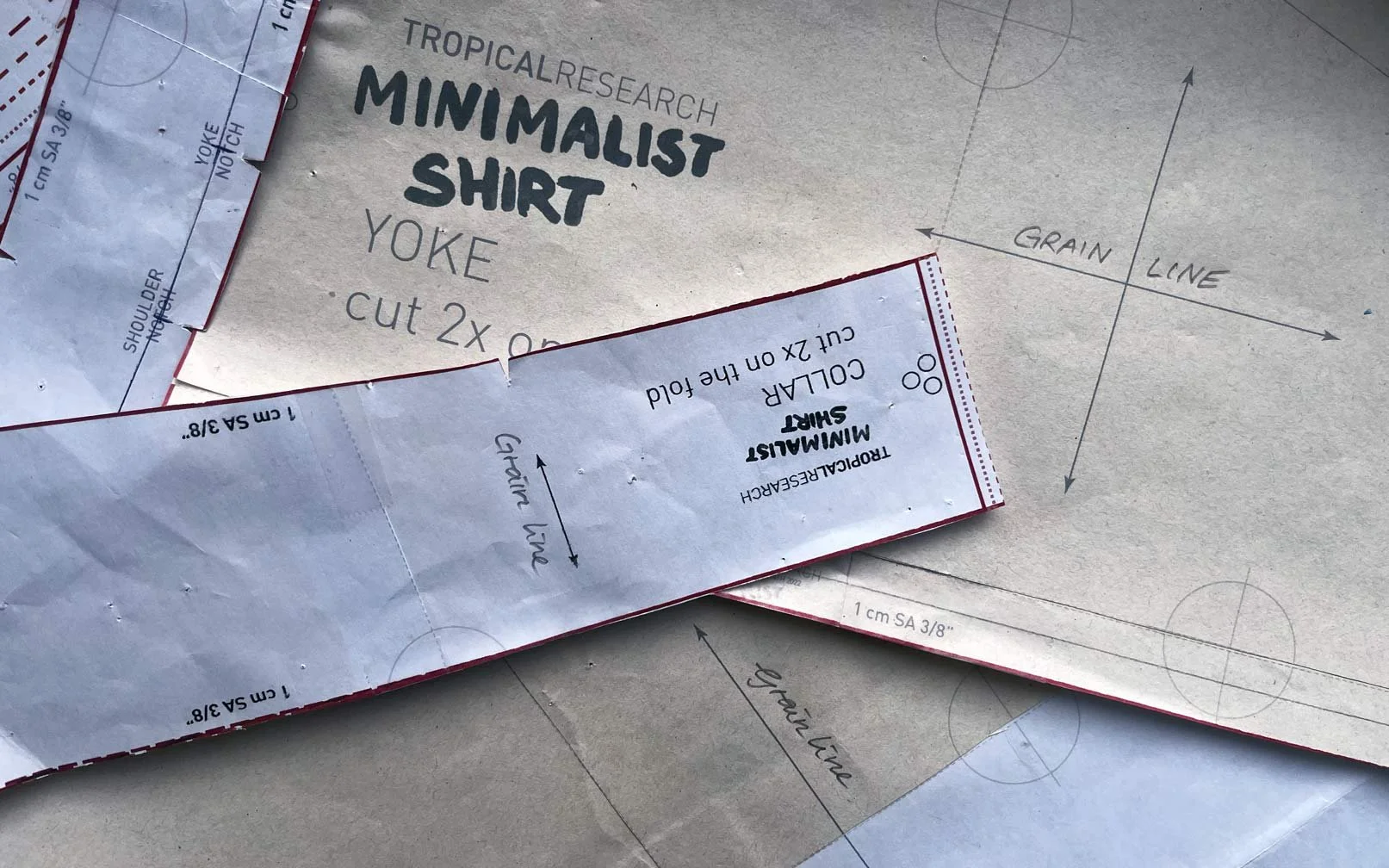
Minimalist shirt pattern pieces with various grainline - the big crossed arrows mean that you can also cut the piece on the cross grain ( i.e. to change the direction of a striped fabric)
KNITTED FABRICS/Jersey
Knitted fabrics behave differently from woven fabrics because they are constructed from interlocking loops rather than perpendicular warp and weft threads.
While knits do not have a traditional woven grain structure, they still have a directional orientation that affects stretch, drape, and garment construction.
Most knits have:
a vertical direction running along the fabric roll
a horizontal direction with the greatest stretch
In garment sewing, pattern pieces are usually placed so the stretchiest direction runs around the body for comfort and movement.
Some knit fabrics also have a visible texture or directional surface, meaning consistency during cutting remains important even without a traditional woven grainline.
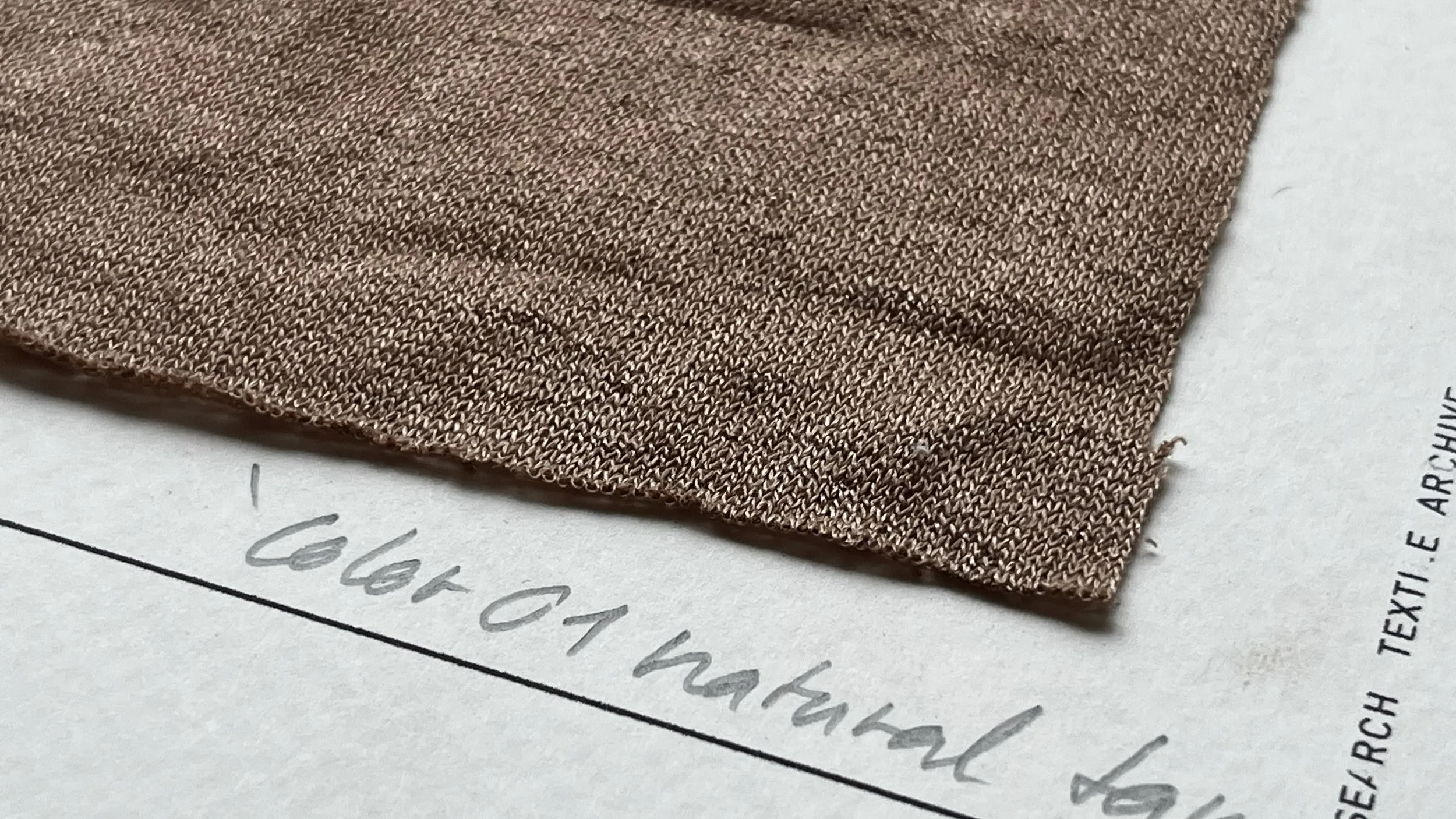
Jersey knit close up - can you see the little V’s?
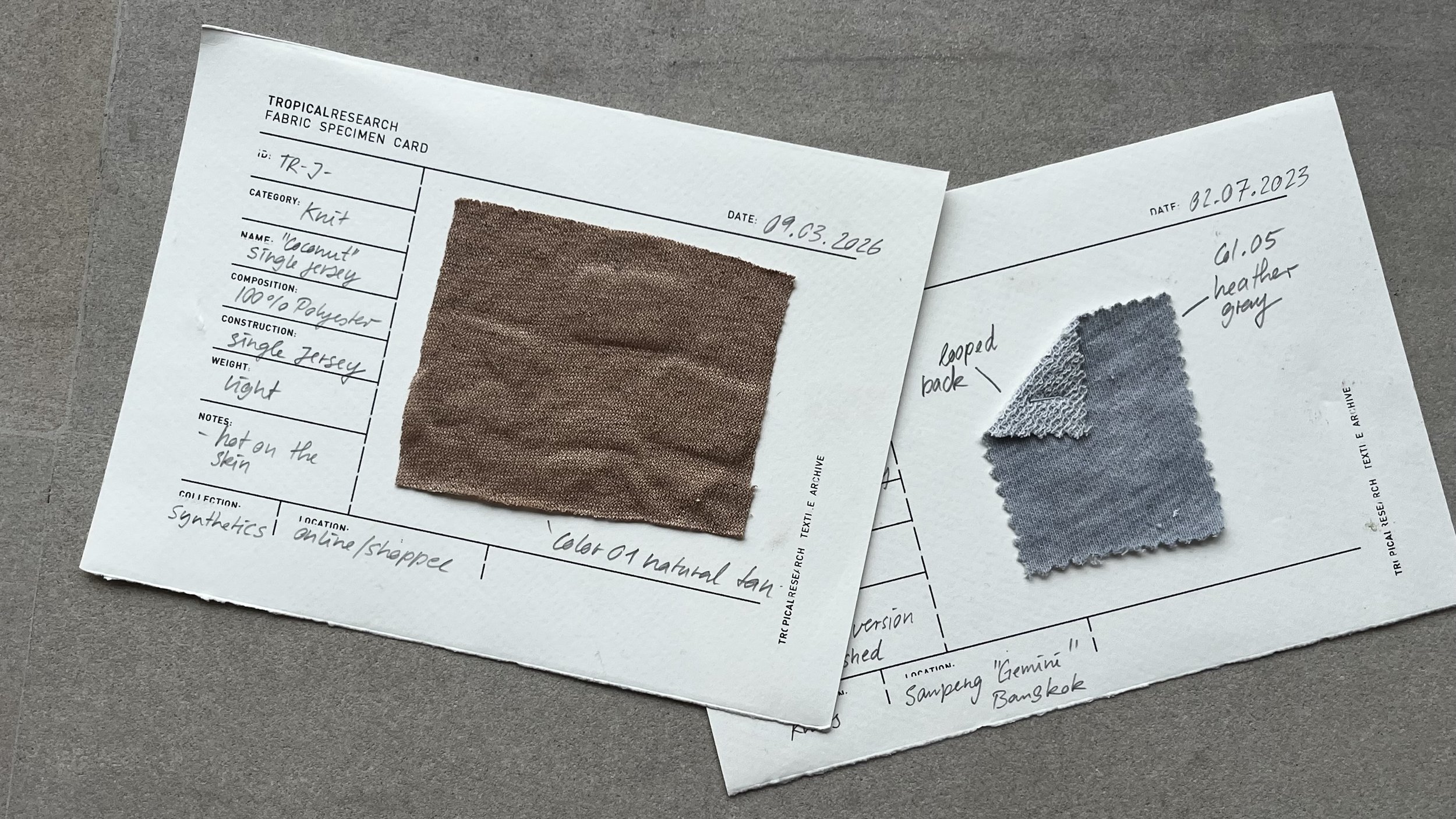
Single jersey and French Terry sample cards
Beginner Tip
Take your time when laying out pattern pieces. Proper grain alignment often makes a bigger difference to the final garment than perfectly precise sewing.
A well-cut garment usually behaves better during the entire sewing process.
