
ZIG ZAG STITCH
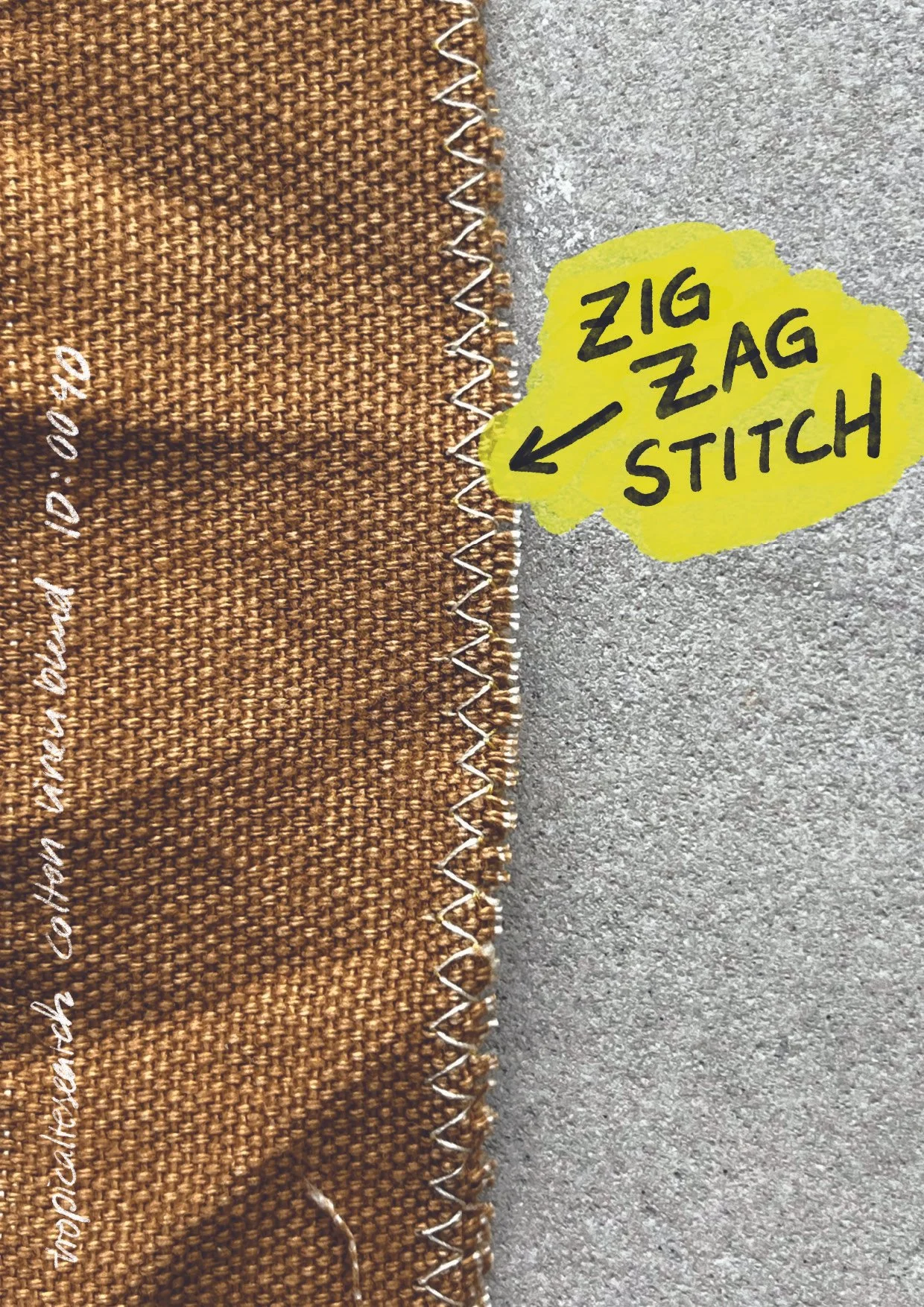
A zig zag stitch is a basic machine stitch in which the needle moves from side to side rather than sewing in a straight line. By adjusting the stitch width and length, the same stitch can be used for a variety of sewing tasks, from finishing raw edges to sewing elastic and creating buttonholes.
Because of its slight flexibility and ability to span over an edge, the zig zag stitch is one of the most versatile stitches found on modern sewing machines.
Common Uses:
Finishing Raw Edges
One of the most common uses of a zig zag stitch is to finish raw fabric edges and help reduce fraying. A narrow or wide zig zag stitch can provide a quick and simple alternative to an overlock or serger, making it especially useful for home sewists.
Sewing Elastic
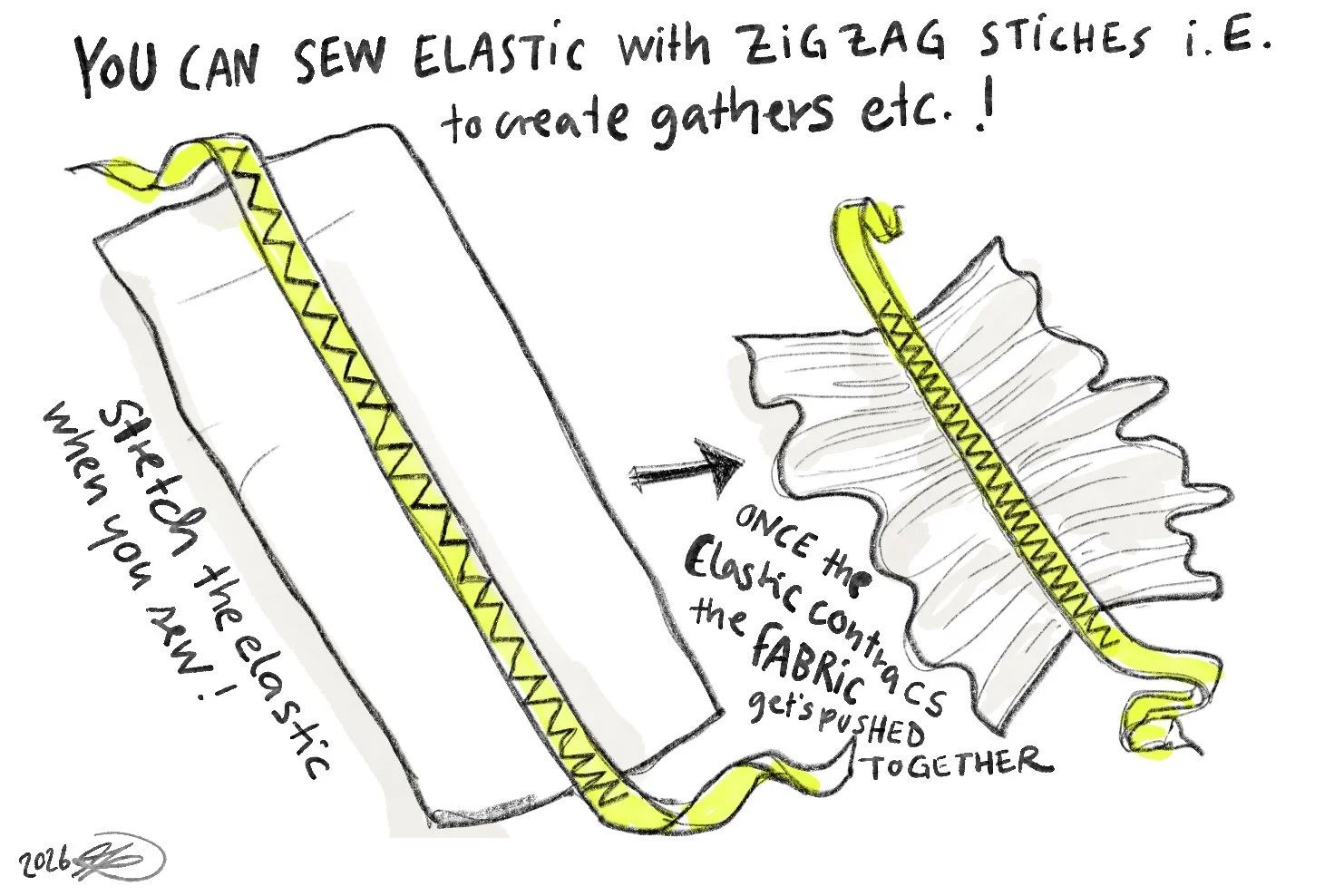
Unlike a straight stitch, a zig zag stitch has some flexibility. This makes it ideal for attaching elastic to waistbands, underwear and activewear, allowing the seam to stretch without breaking.
Sewing Knit Fabrics
A narrow zig zag stitch can be used to sew knit fabrics when a stretch stitch or serger is not available. The added flexibility helps prevent stitches from popping when the fabric stretches- but the seam will be a bit wobbly.
Buttonholes
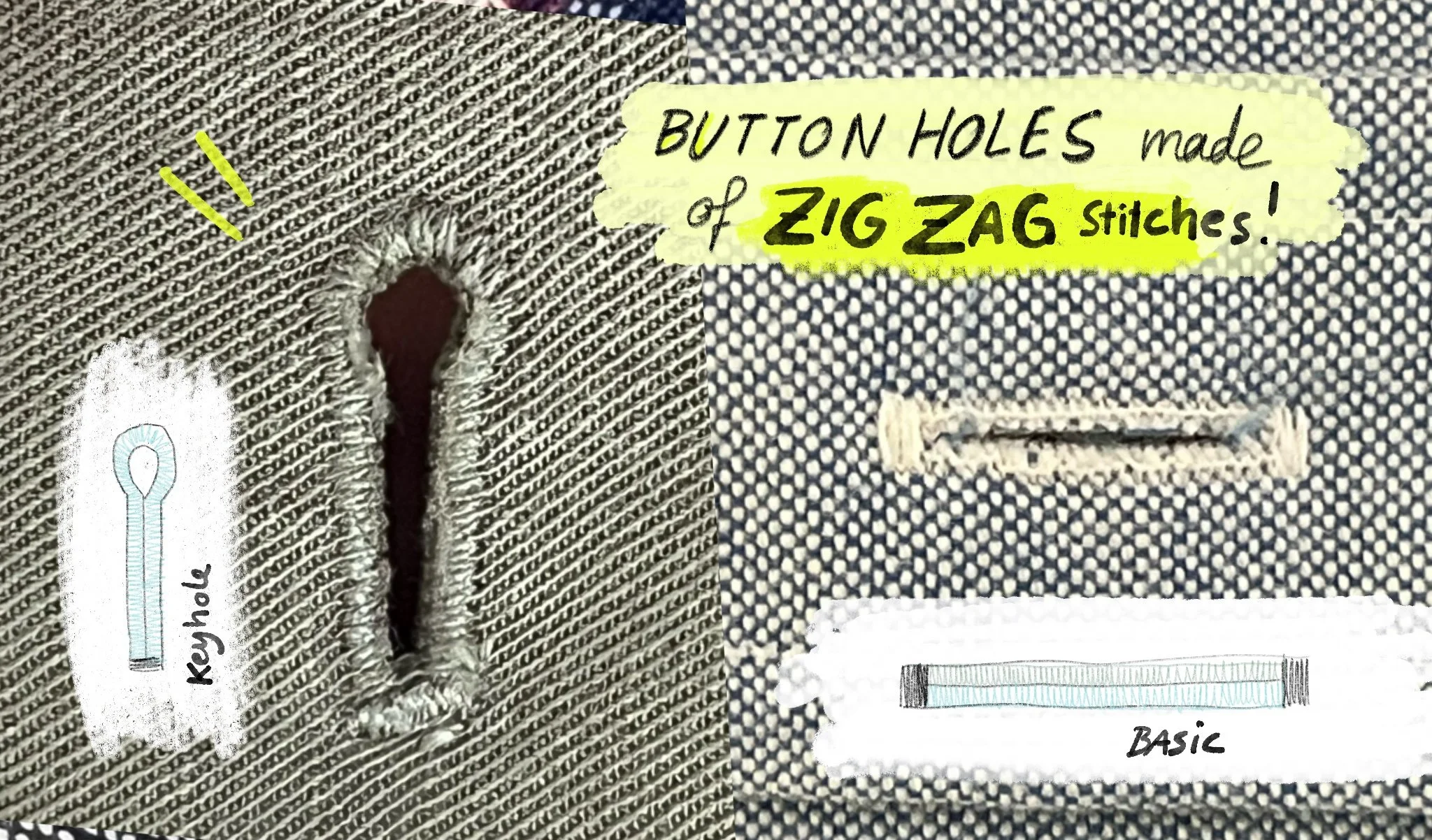
Most sewing machines create buttonholes using very dense zig zag stitches. The closely spaced rows of stitching form strong and durable buttonhole edges. most machines can sew the basic rectangular style - most have some sort of special program ( possibly even presser foot) to make this easy. Some of the better models can also do the more fancy keyhole shape that is commonly found in jeans and jackets.
Satin Stitch and Decorative Sewing

By combining a wide stitch with a very short stitch length, the zig zag stitch becomes a dense satin stitch. Satin stitches are often used for appliqué, decorative embroidery and reinforcing cut edges.
BAR TACKS
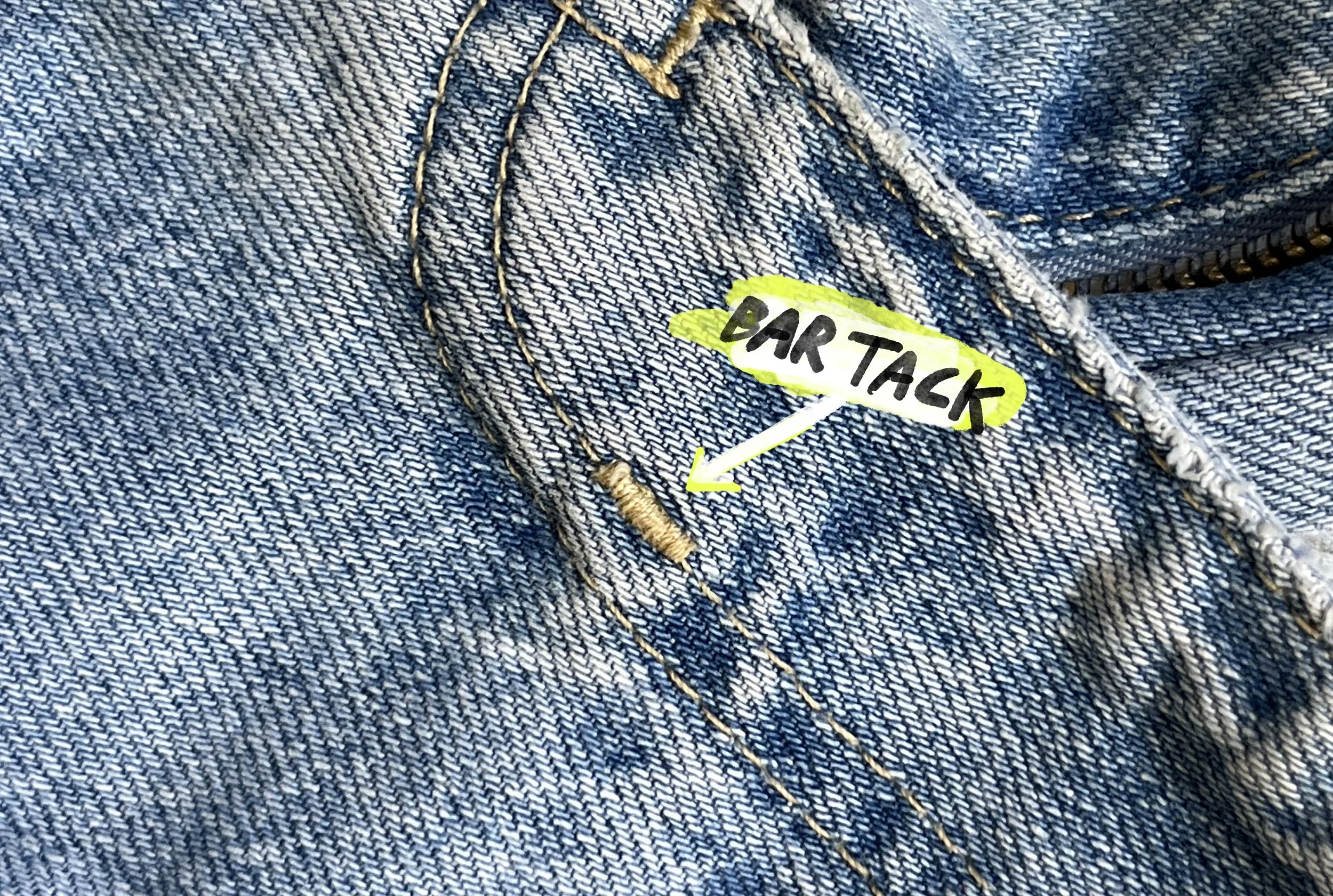
Short and dense zig zag stitches are sometimes used to create bar tacks. These small reinforcements are commonly found at pocket corners, belt loops and other areas exposed to stress.
Adjusting a Zig Zag Stitch
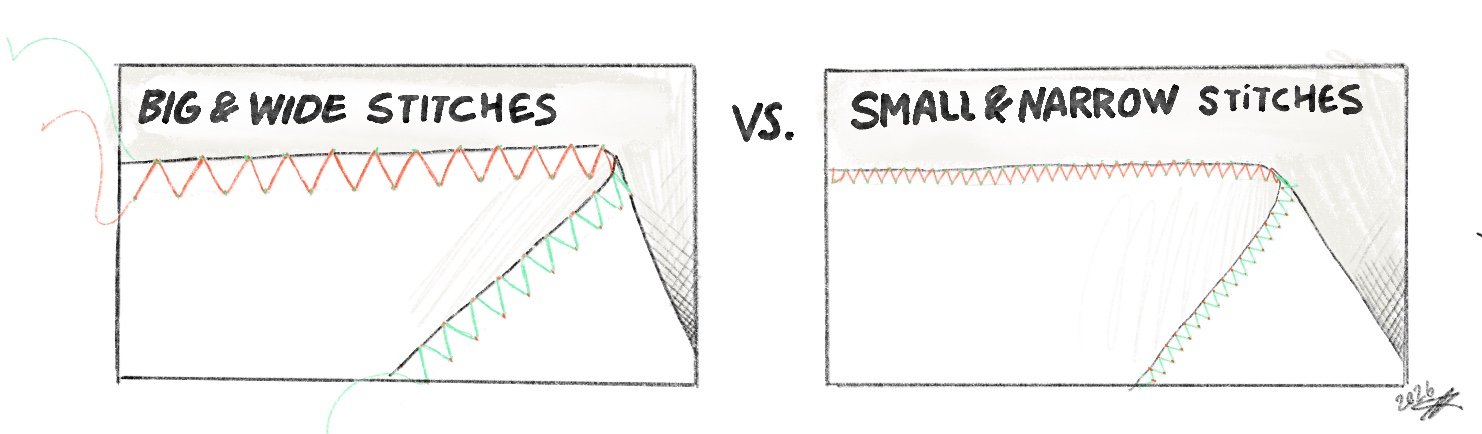
Most sewing machines allow you to adjust two settings:
Stitch width controls how far the needle swings from side to side.
Stitch length controls the distance between individual stitches.
Narrow Zig Zag Stitch
A narrow zig zag stitch creates a flexible seam and is often used for sewing elastic and knit fabrics.
Wide Zig Zag Stitch
A wide zig zag stitch covers more area and is commonly used to finish raw edges or for decorative effects.
Zig Zag Stitch vs Overlock Stitch
Although a zig zag stitch can be used to finish raw edges, it is not a replacement for an overlock or serger. A zig zag stitch uses a single needle and bobbin thread, while an overlock machine uses multiple threads and loopers to create a stronger and cleaner edge finish.
For many home sewists, however, a simple zig zag stitch provides an effective and versatile solution without the need for a separate machine.
Related Terms
Watch a short video below:
