
Overlock/Serger
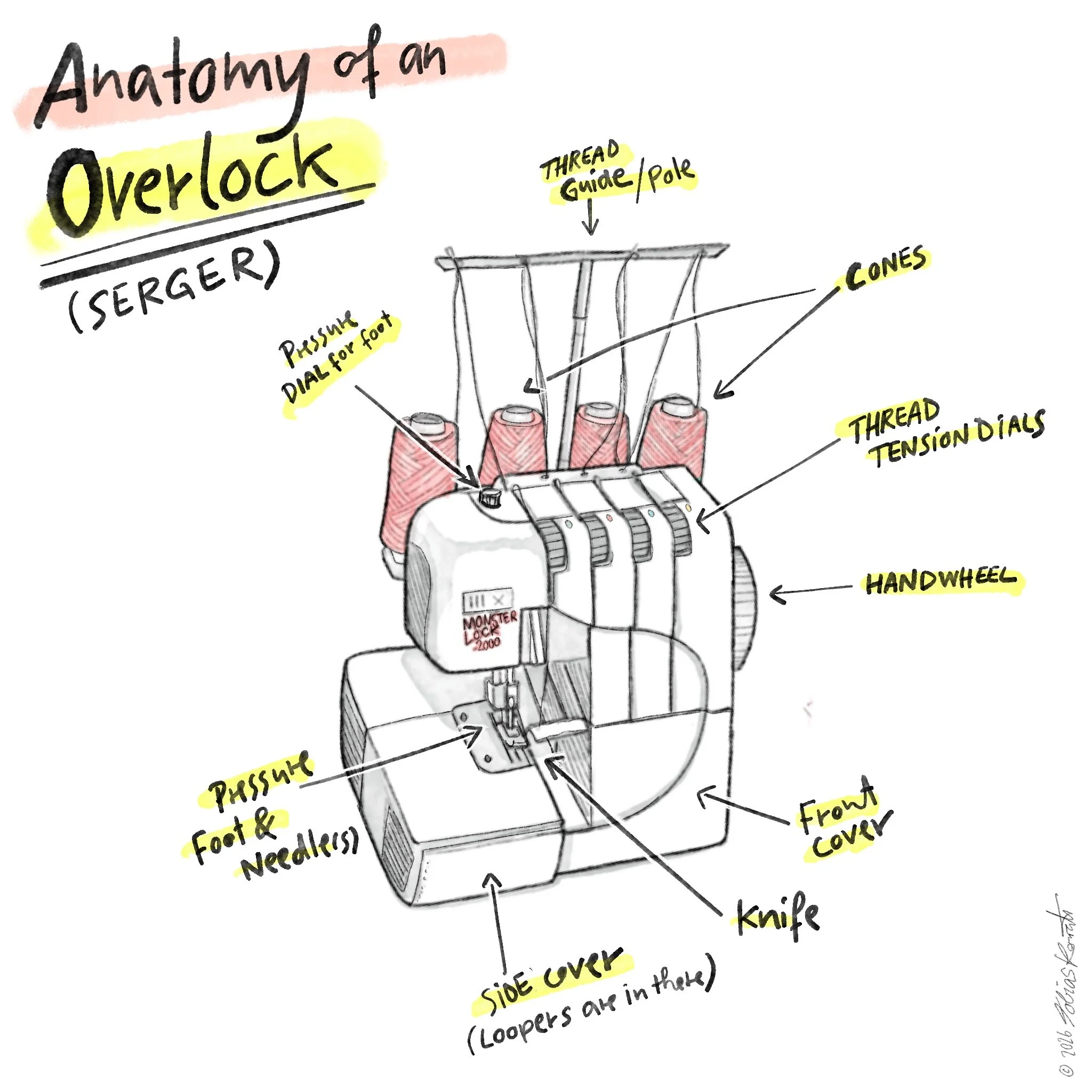
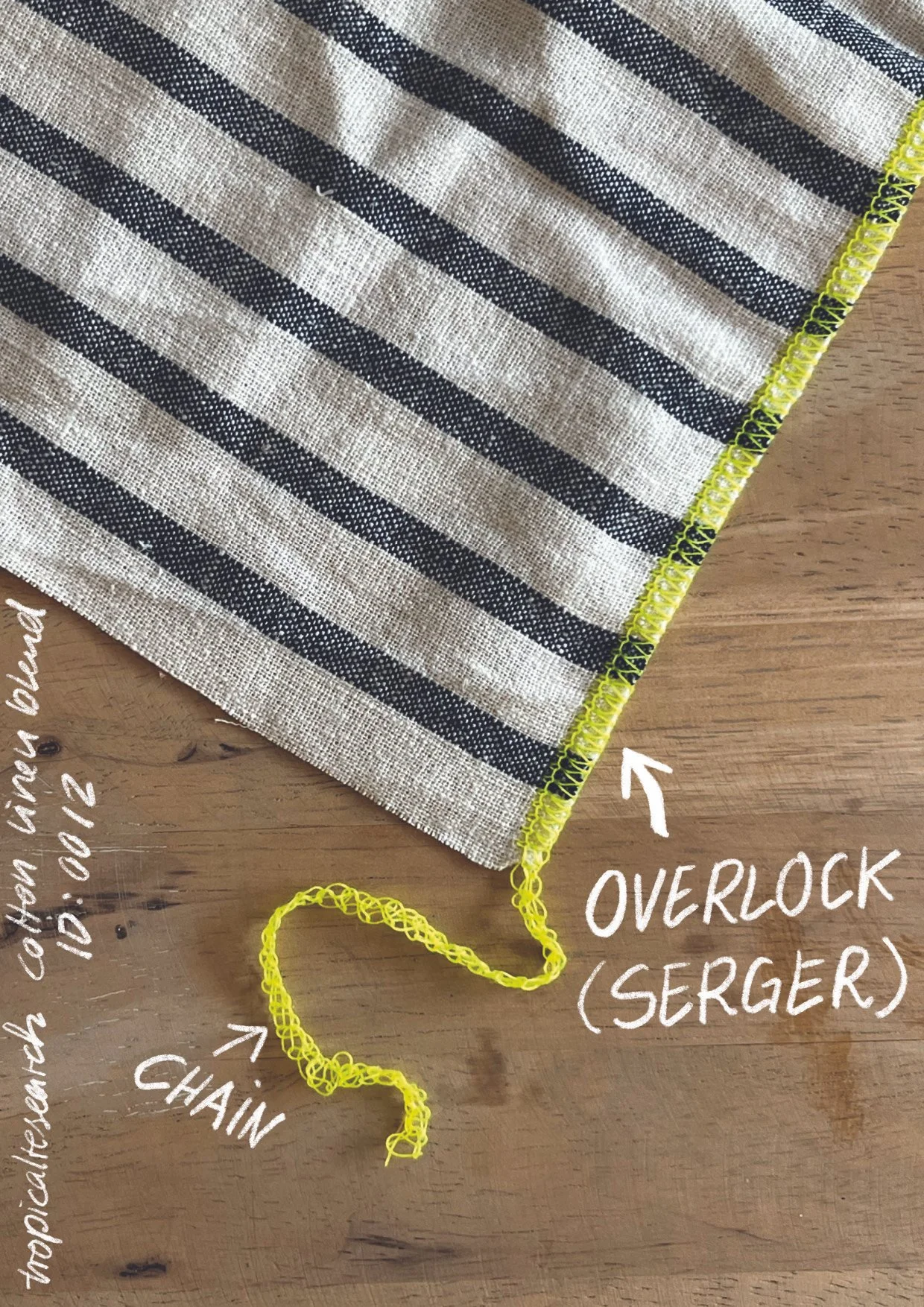
An overlock machine, known as a serger in North America, is a specialised sewing machine designed to trim, stitch, and finish fabric edges in a single step.
Unlike a regular sewing machine, an overlocker uses multiple threads and loopers instead of a bobbin. It creates neat, professional-looking seams and is commonly used for finishing woven fabrics and constructing knit garments.
Overlockers are fast, efficient, and are found in both home sewing rooms and garment factories.
What Is an Overlock Used For?
An overlock machine can be used to:
Finish raw edges and prevent fraying.
Sew knit garments such as T-shirts and sweatshirts.
Construct seams and finish them at the same time.
Create rolled hems.
Gather fabric using differential feed.
Produce professional-looking seam finishes.
Sewing Machine vs Overlocker
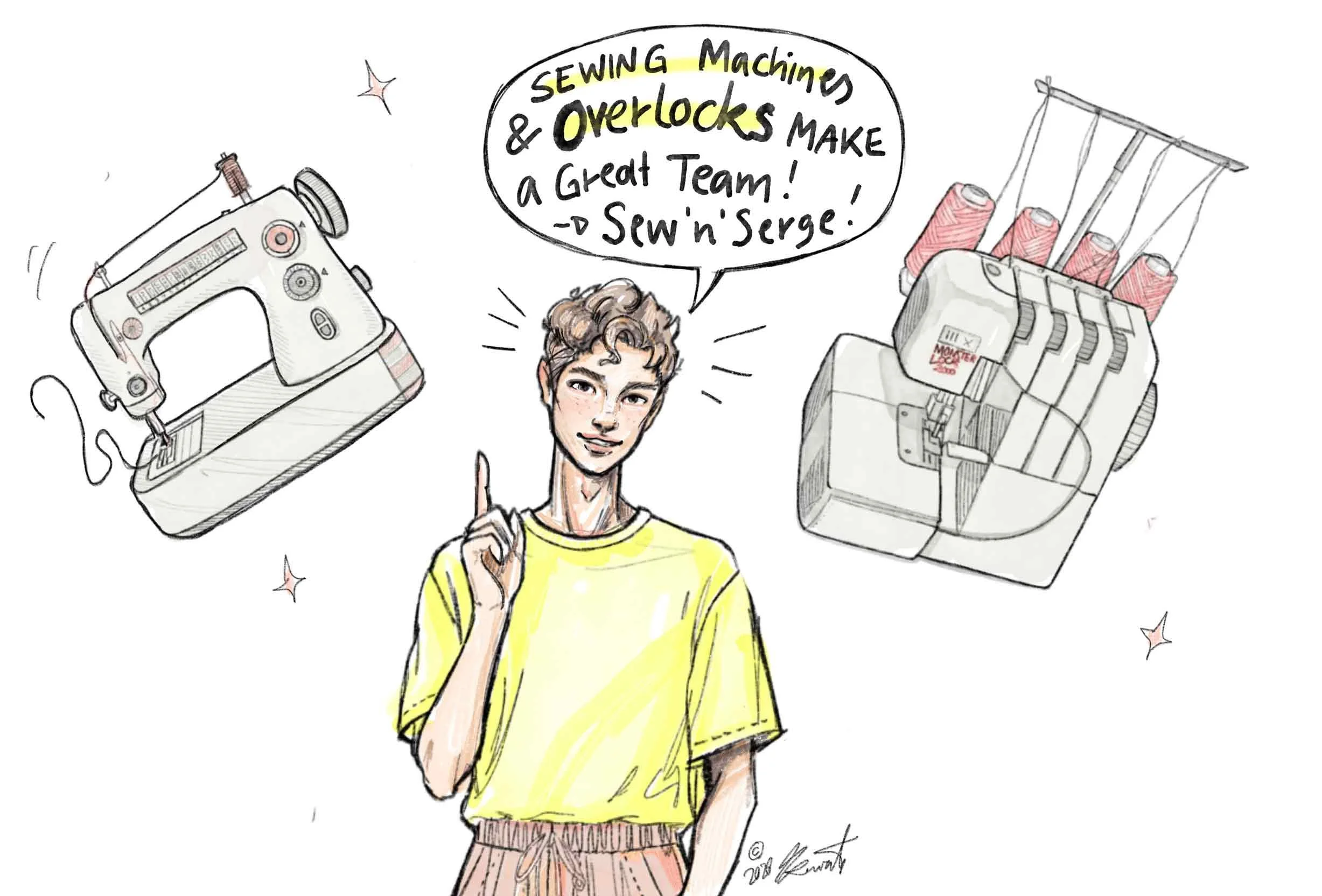
An overlocker complements a regular sewing machine but does not replace it.
A sewing machine is more versatile and is needed for tasks such as topstitching, zippers, buttonholes, and precise construction. An overlocker excels at finishing raw edges and quickly sewing knit garments.
Many beautiful garments can be sewn without an overlocker using techniques such as French seams, flat-felled seams, or zigzag finishes.
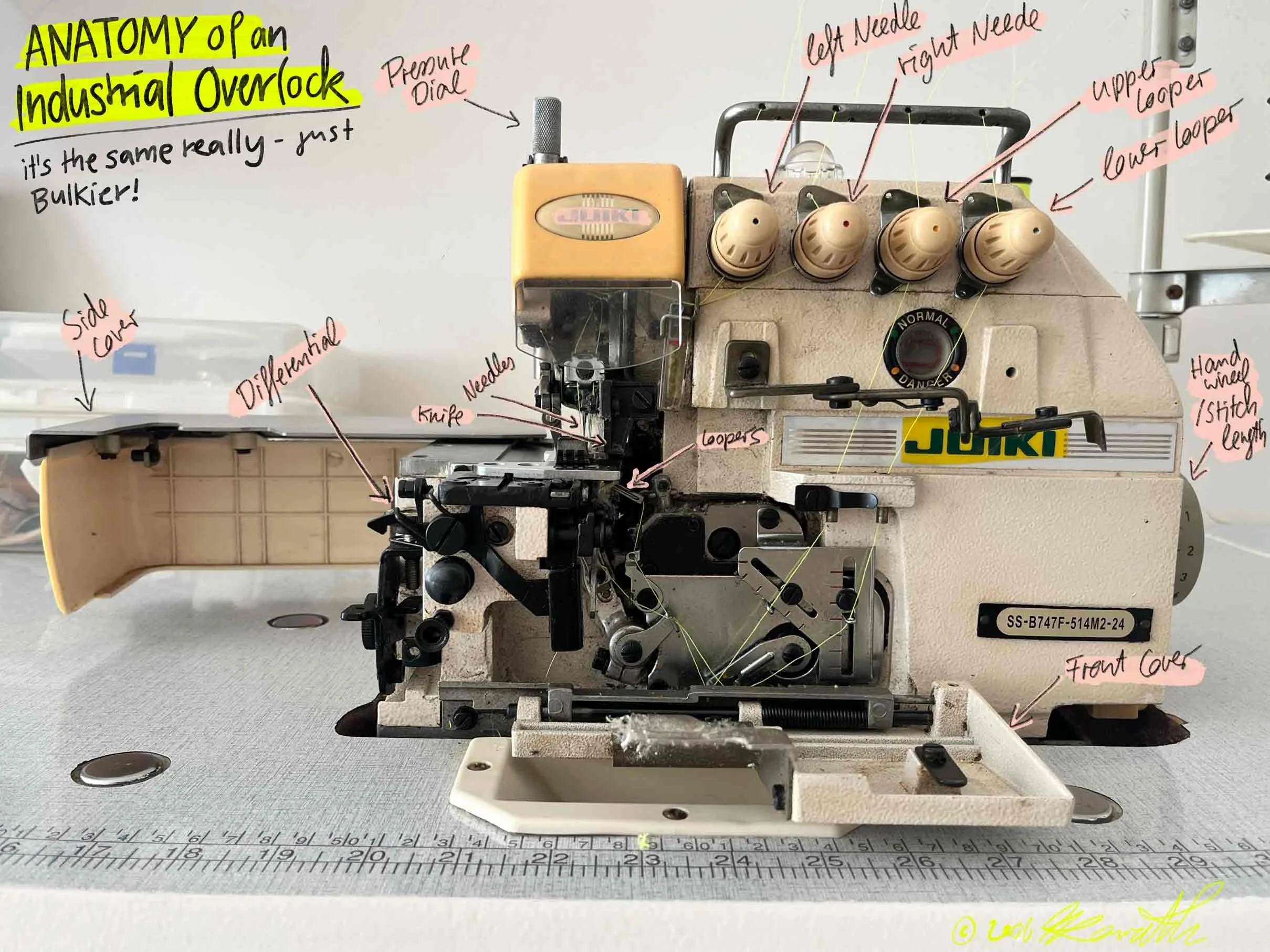
This is my Chinese factory serger with the covers open - the inner workings can be confusing at first !
Needles and Loopers
Unlike a regular sewing machine, an overlocker has no bobbin.
Instead, the stitches are formed by:
One or two needles.
An upper looper.
A lower looper.
The loopers wrap thread around the edge of the fabric while the needles create the straight rows of stitching.
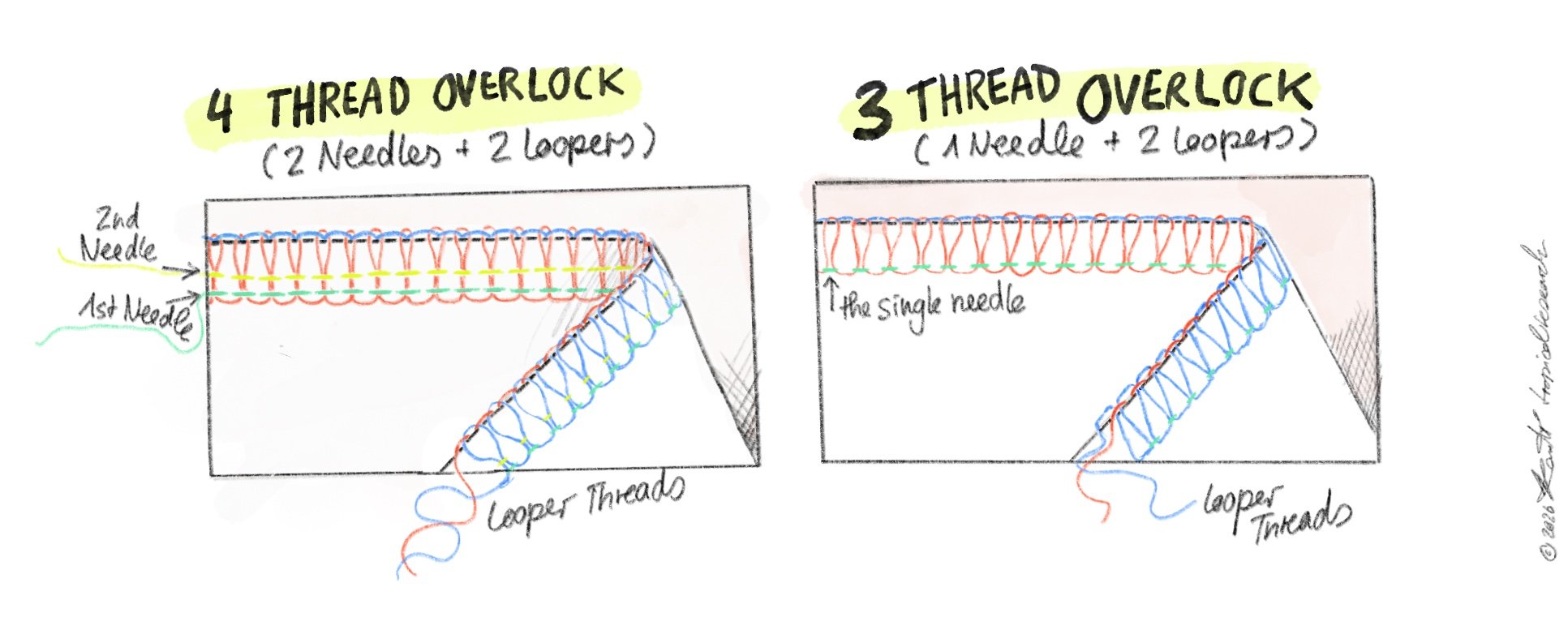
If you have a 4 thread overlock you can simply remove the 2nd needle to get a different finish!
Three-Thread Overlock
A three-thread overlock uses:
One needle.
Two loopers.
It is commonly used for:
Finishing raw edges.
Lightweight fabrics.
Rolled hems.
Four-Thread Overlock
A four-thread overlock uses:
Two needles.
Two loopers.
It creates a stronger seam and is commonly used for sewing knit garments such as T-shirts, leggings, and sweatshirts.
The Knife
Most overlock machines include a built-in knife.
As the fabric passes under the presser foot, the knife trims away excess seam allowance before the stitches wrap around the freshly cut edge.
This allows the machine to trim, stitch, and finish the edge in one operation.
The knife can usually be disengaged when trimming is not required.
Stitch Length and Stitch Width
Overlock stitches can be adjusted just like regular stitches.
Longer stitches are useful for:
Thick fabrics.
Bulky seams.
Gathering.
Shorter stitches create a denser finish and are often used for rolled hems or lightweight fabrics.
Most machines also allow the stitch width or cutting width to be adjusted.
Differential Feed
One of the most useful features of an overlock machine is the differential feed.
Unlike a regular sewing machine, an most overlockers uses two sets of feed dogs that can move at different speeds.
Differential feed can:
Prevent stretched seams on knit fabrics.
Reduce puckering on lightweight fabrics.
Gather fabric.
Create decorative lettuce edges.
For many sewists, differential feed is one of the greatest advantages of an overlock machine.
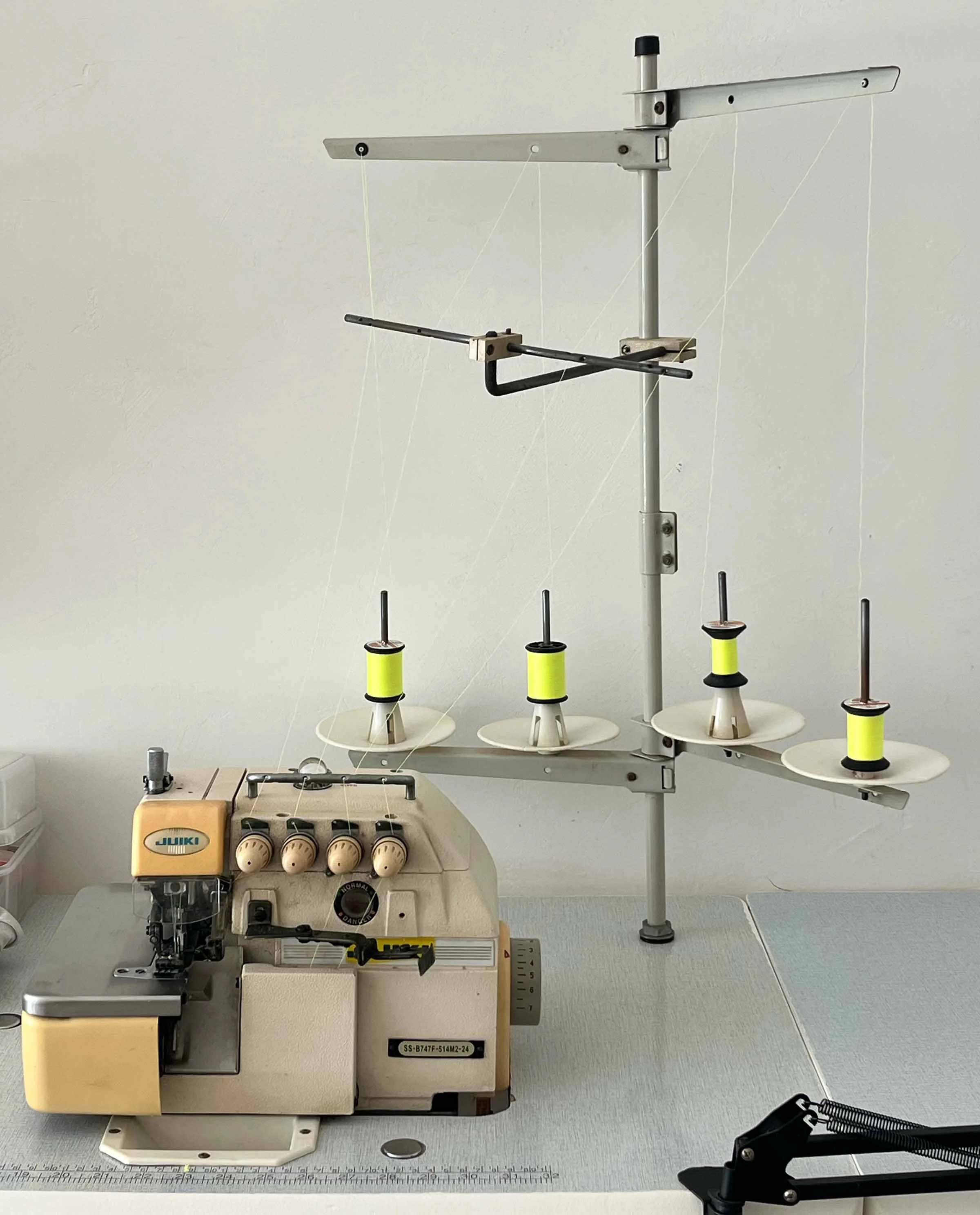
The Thread guide pole on this one is pretty massive but it keeps the threads separated and neat - and yes you don’t need cones - regular sewing thread works just fine and
Thread Cones
Overlockers consume much more thread than regular sewing machines and are usually used with large thread cones.
Cone thread is economical and available in many colours, but you can also use regular sewing threads or specialized ones for swimwear! I personally like to add a pop of color with my overlock and tend to use neon threads or mix and match colors for fun :)
Threading and Tension
Overlock machines have a reputation for being difficult to thread, but modern machines are much easier than their reputation suggests.
Most home machines feature:
Colour-coded threading paths.
Thread guides.
Lower looper threaders.
Air-threading systems on some models.
Since several threads work together, adjusting the tension of one thread affects the appearance of the entire stitch.
With a little practice, threading and tension adjustment quickly become routine. Industrial machines are a bit more of a hassle and are not necessarily designed for convenience - most have color coding but threading is one of these tasks that can easily ruin an entire morning or afternoon ….
Home and Industrial Overlock Machines
Home overlockers are compact, versatile, and designed for a variety of sewing tasks.
Industrial overlockers are faster, heavier, and usually dedicated to a single stitch type.
While industrial machines are common in garment factories, most home sewists will find that a domestic overlocker provides more than enough functionality.
Do You Need an Overlock Machine?
No….
An overlocker is a convenient tool rather than an essential one.
Many garments can be sewn entirely on a regular sewing machine using seam finishes such as:
French Seams.
Flat-Felled Seams.
Zigzag Stitch.
Bound Seams.
However, if you enjoy sewing knit garments or want faster, professional-looking seam finishes, an overlock machine can be a wonderful companion to a regular sewing machine.
In Summary
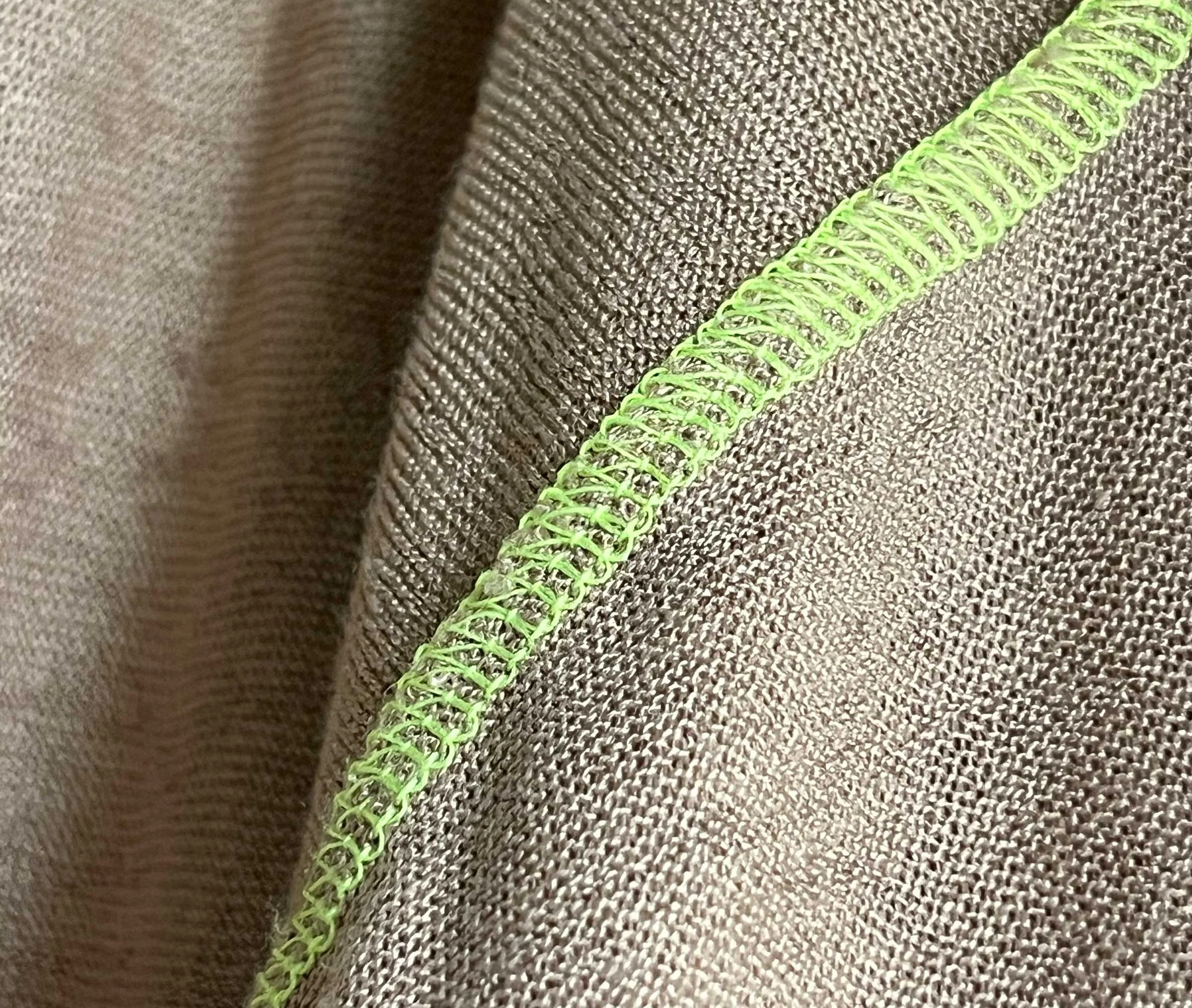
An overlock machine, or serger, is a specialised sewing machine that trims, stitches, and finishes fabric edges in one operation.
It is commonly used to finish woven fabrics and construct knit garments, making it one of the most useful companions to a regular sewing machine.
